REVIEW · TOKYO
Mount Fuji (Mt. fuji) private tour by car with pickup from Tokyo
Book on Viator →Operated by Season for Tours · Bookable on Viator
Fuji in a private car beats the grind. This Mount Fuji day tour runs from Tokyo hotel pickup to a lineup of classic Fuji spots, with a clean, air-conditioned car and an English-speaking driver who can shape the day around what you care about. You’re not stuck on a fixed bus route, and you get to hop between viewpoints, shrines, lakeside towns, and optional extras like 5th Station or the Aokigahara caves.
I love the privacy. Up to three people ride together, so you can actually move at a comfortable pace and ask for timing tweaks on the spot. I also like the way the driver adds local context and photo-friendly stop selection—names like Attary, Umar, Ali, and Faisal have come up in past days, and the common theme is clear, practical guidance plus a calm, attentive style.
One possible drawback: Mount Fuji views can be hit-or-miss when the weather turns, and even in good weather, the “optional” stops need smart prioritizing. If you try to add everything, you’ll feel rushed or might miss a favorite when traffic and travel time stack up.
In This Review
- Key things I’d plan around
- Private pickup from Tokyo: what the car day really feels like
- How custom stops work (and how to avoid the time crunch)
- Chureito Pagoda at Arakura Sengen Shrine: Fuji framed by steps
- Oshino Hakkai: eight ponds, clear water, and a close Fuji feel
- Kitaguchi Hongu Fuji Sengen Jinja: the north-side shrine for Fuji worship
- Lake Kawaguchiko: where most plans happen, plus cruise and ropeway add-ons
- Oishi Park and Saiko Iyashi no Sato Nemba: views plus old-Japan atmosphere
- Mount Fuji 5th Station: the high-altitude viewpoint option
- Aokigahara lava caves: Narusawa Ice Cave and Fugaku Wind Cave
- Narusawa Ice Cave
- Fugaku Wind Cave
- Kogamasao Memorial Park and Itchiku Kubota Art Museum: calmer pace, art-focused payoff
- Tenku no Torii, Gotemba outlets, and Fuji Chobo-no-yu Yurari Onsen
- Tenku no Torii
- Gotemba Premium Outlets
- Fuji Chobo-no-yu Yurari Onsen
- Timing tips from real days: how to keep the day from getting swallowed by traffic
- Value check: is $465 per group a fair deal?
- Who this Mount Fuji private car tour is best for
- Should you book it? A quick decision guide
- FAQ
- What’s included in the Mount Fuji private car tour?
- How many people can ride in a group?
- How long is the tour?
- Where do you get picked up?
- Are the listed stops guaranteed?
- Does the tour include lunch?
- Are there extra fees at Lake Kawaguchiko?
- What if weather is bad?
- What’s the cancellation rule?
Key things I’d plan around
- Private, no-sharing ride: you control the pace and can tailor stops instead of following a rigid group schedule
- Customizable itinerary with optional stops: build a short priority list so you don’t feel stressed if time runs short
- Fuji viewpoints in multiple styles: shrines, lakeside scenery, and high-altitude views all in one day
- Caves stay cool (literally): if you pick the Aokigahara lava tubes, you trade views for an underground temperature break
- Lunch is on you: Lake Kawaguchiko has plenty of places, but the tour doesn’t include a meal plan
Private pickup from Tokyo: what the car day really feels like
This is one of those day trips that feels simple, not simplistic. You start with pickup from your Tokyo hotel or apartment, then you’re driven out to the Fuji Five Lakes area (plus nearby spots) in a modern, clean vehicle with air-conditioning. Highway tolls and petrol/gas are included, so you’re not constantly doing mini checkouts during the trip.
Why I like this format: you avoid the most annoying part of seeing Fuji from Tokyo. Getting to the right region at the right time is half the battle, and public transport can mean transfers, walking, and timing pressure. With a car, you can spend your energy on the scenery and the stops.
The “English-speaking driver” part matters too. It’s not just directions; it’s stop context—what to look for, why it’s there, and what tends to photograph well. I’ve seen drivers described as attentive and professional, and a few guests noted their guide helped with preferences for where to eat. If you’d rather not improvise everything in Japanese, this setup helps a lot.
Other Mount Fuji tours we've reviewed at Mt Fuji & Kawaguchiko
How custom stops work (and how to avoid the time crunch)
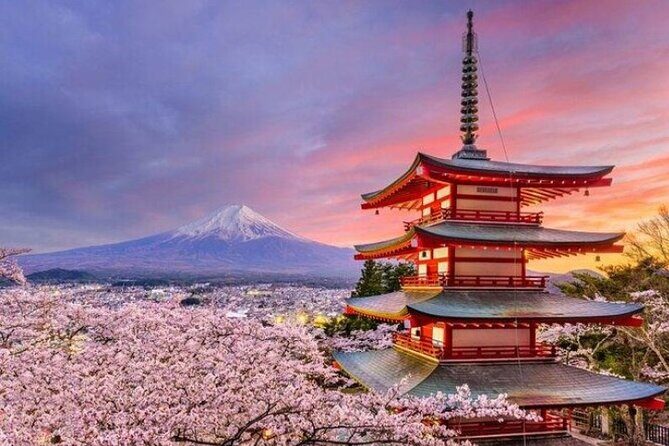
The itinerary is flexible. You choose from a list of stops that includes big classics like Chureito Pagoda and Oshino Hakkai, plus optional add-ons such as the 5th Station area, lava caves, an onsen, and shopping.
Here’s the practical part: the tour is about 8 to 10 hours, and the stops have set time windows. So even if you start with 13 listed options, you still need to pick. During busier periods (like Golden Week), traffic and travel time can eat the margin you’d expect on a normal day.
My advice: make a mini game plan before your pickup.
- Pick one “must” Fuji view stop (often Chureito Pagoda, Oshino Hakkai, or Kawaguchiko).
- Pick one nature/culture stop (Oishi Park, Saiko Iyashi no Sato Nemba, or a shrine).
- Save optional extras for if timing looks good that day (like 5th Station, caves, or Tenku no Torii).
Also, plan your start time. One useful tip from a past day: leaving earlier helps you beat the traffic jam. If you’re aiming to maximize stops, know that getting from central Tokyo to the first sights can take about an hour and forty minutes from certain hotel areas, so don’t treat that part casually.
Chureito Pagoda at Arakura Sengen Shrine: Fuji framed by steps
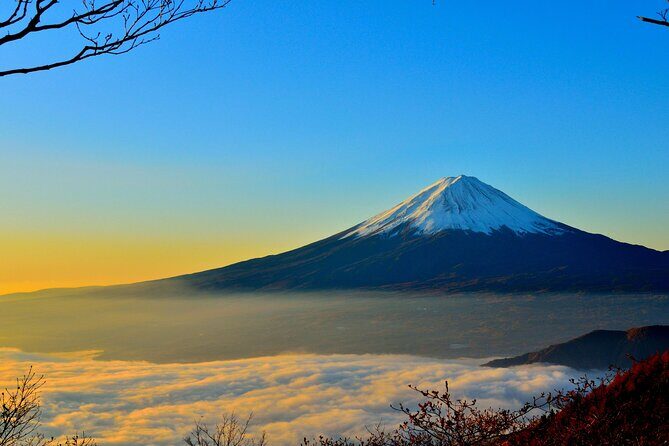
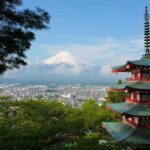
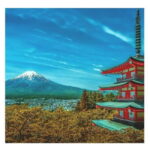
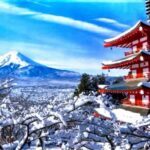
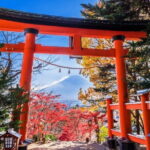
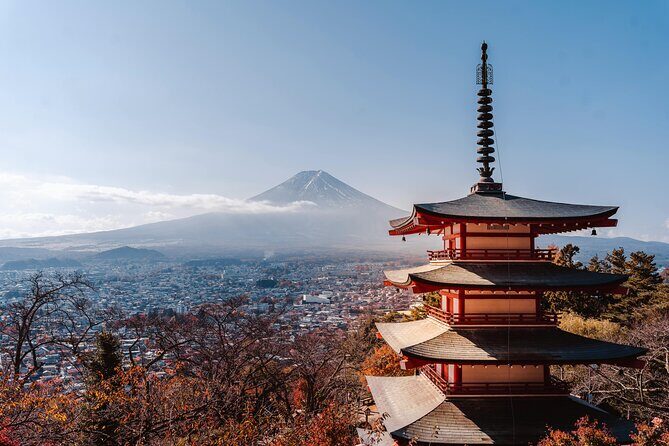
Your first big wow moment is Chureito Pagoda. It’s a five-storied pagoda on the mountainside above Fujiyoshida City, with Mount Fuji sitting in the distance when the sky cooperates.
This stop is tied to Arakura Sengen Shrine, and it’s not just a pretty photo target. The pagoda is described as a peace memorial built in 1963, and the approach includes a climb—about 400 steps from the shrine’s main buildings.
What you get in practice:
- A classic Fuji composition that’s hard to recreate on your own.
- A short, focused experience that doesn’t swallow the whole morning.
- A shrine-and-pagoda setting that feels calmer than some of the roadside viewpoints.
If you’re someone who likes walking for photos, this is a good opener. If you’re not, it’s still manageable because the stop time is about an hour, so you can pace yourself.
Oshino Hakkai: eight ponds, clear water, and a close Fuji feel
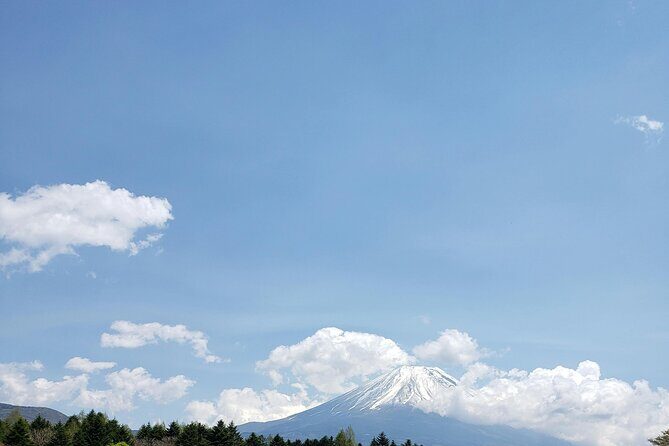
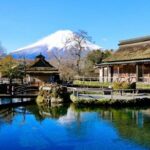
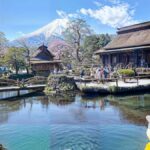
Oshino Hakkai is one of the best “Fuji region” introductions because it’s simple to understand quickly. You see a group of eight ponds in Oshino, a small village between Lake Kawaguchiko and Lake Yamanakako.
The ponds are fed by snowmelt from Mount Fuji. Water filters down through porous lava layers for over 80 years, so what you’re looking at is very clear spring water. The site used to include a sixth lake that dried out centuries ago, which adds a layer of meaning beyond the scenery.
Expect:
- An easy, sightseeing-focused stop (about 30 minutes).
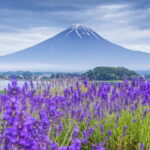
- Photo angles that often show Mount Fuji clearly when conditions are good.
- A crowdier vibe than you’d get in a remote countryside village, since it’s a famous stop.
One thing to watch: this is weather-dependent. When visibility is strong, Oshino Hakkai can feel like Fuji is close enough to touch. When clouds roll in, the ponds still look beautiful, but the magic view can fade.
Kitaguchi Hongu Fuji Sengen Jinja: the north-side shrine for Fuji worship
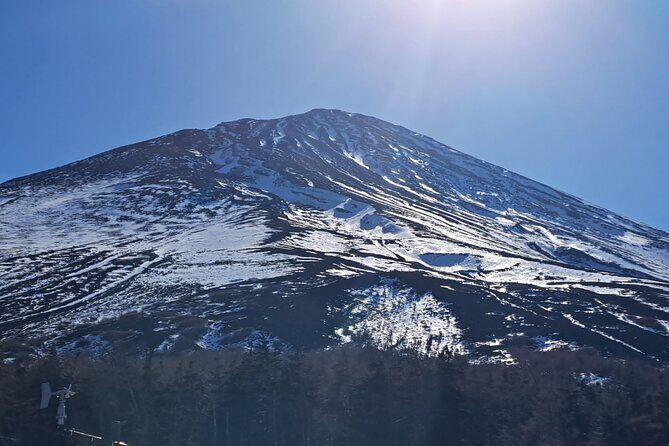
Next up is Kitaguchi Hongu Fuji Sengen Jinja, also known as the Fujiyoshida Sengen Shrine. It’s the main Sengen Shrine on the north side of Mount Fuji.
This shrine has deep roots. It’s said to have been established in CE 100 and is dedicated to Konohanasakuya-hime, the Shinto goddess associated with Mount Fuji.
Why this stop works on a day trip:
- It breaks up the “look at Fuji, take photos” rhythm.
- You get context for how the mountain is viewed culturally, not only visually.
- It’s a good pause before lakeside driving and optional extras.
You’ll typically have about an hour here, which is enough time to see the main areas without feeling rushed.
Other day trips from Tokyo to Mt Fuji & Kawaguchiko

Lake Kawaguchiko: where most plans happen, plus cruise and ropeway add-ons
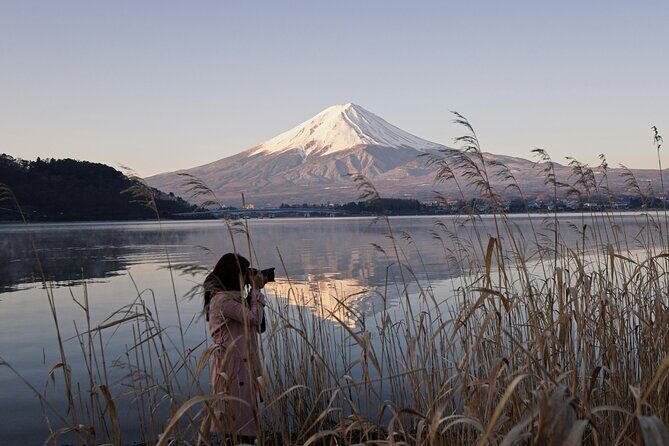
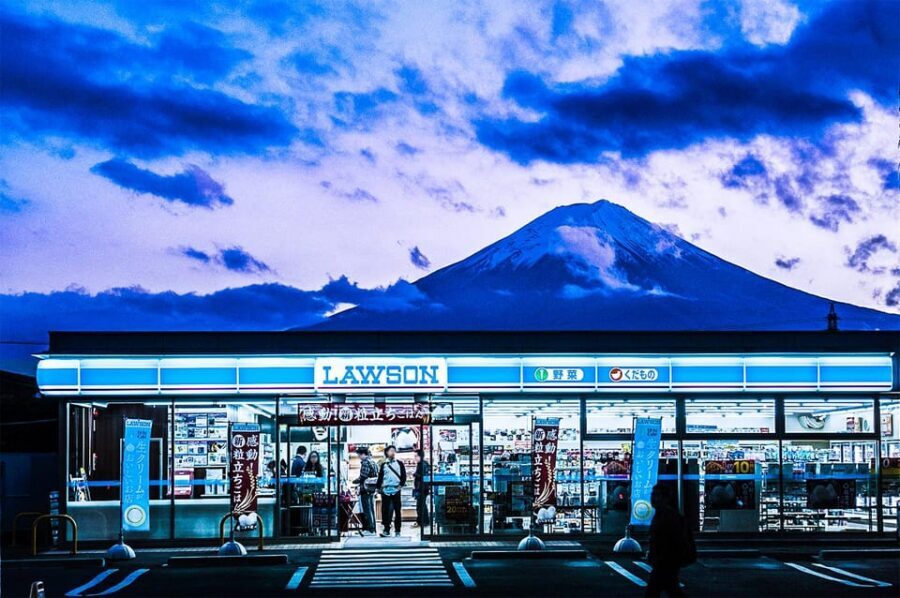
Lake Kawaguchiko is the practical hub for lunch options. If you want to eat during the day, you’ll find lots of restaurants around the lake.
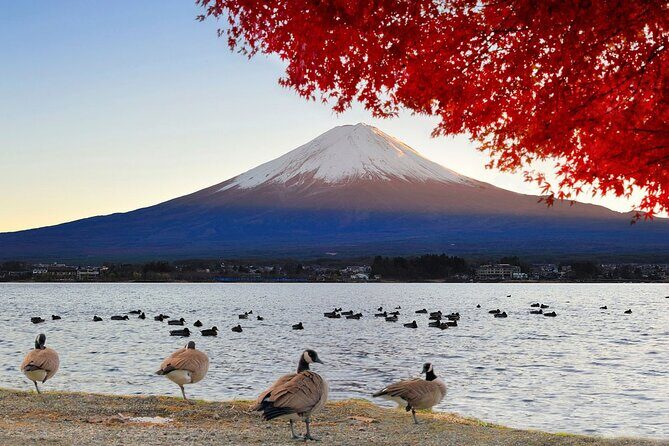
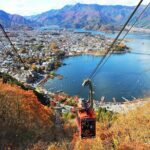
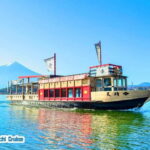
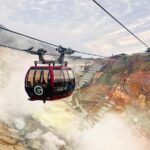
The lake sits at about 830 meters above sea level, which is why it often brings cooler summers and icy winters to the region. You also get multiple ways to experience the water, including a ship cruise or a cable car/ropeway—both listed as options with a separate fee of about 1,000 yen per person.
In the tour rhythm, Lake Kawaguchiko tends to be about an hour. That’s a sweet spot. Long enough to grab lunch, walk a bit, and get a couple of viewpoint moments. Not so long that you feel stuck if the weather changes.
If you like comfort planning, this is the stop to anchor your schedule. Food is easier here than at the smaller, more photo-oriented spots.
Oishi Park and Saiko Iyashi no Sato Nemba: views plus old-Japan atmosphere
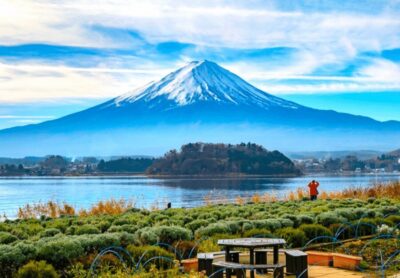
Oishi Park is a quick stop (around 30 minutes), and it’s chosen for one reason: you can often see Mt. Fuji and the lake from the same place. It’s a strong option when you want a “straight-on Fuji with water” photo.
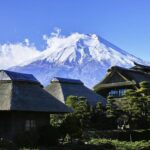
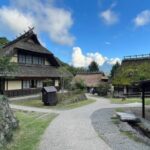
Then there’s Saiko Iyashi no Sato Nemba, a more cultural add-on. It’s described as a picturesque area with old Japanese houses with straw roofs, plus craft shops and local artists. Rental options include kimono and samurai armor, which can turn a short stop into a fun, memorable break.
Timing here is about 30 minutes. Admission is not included for this stop, so treat it as an optional cultural add-on rather than a must-book.
Who will enjoy this pairing:
- Couples who want both scenery and a bit of local life
- Families who like dressing up or watching artisans
- Anyone who doesn’t want the day to be all viewpoints and driving
Mount Fuji 5th Station: the high-altitude viewpoint option
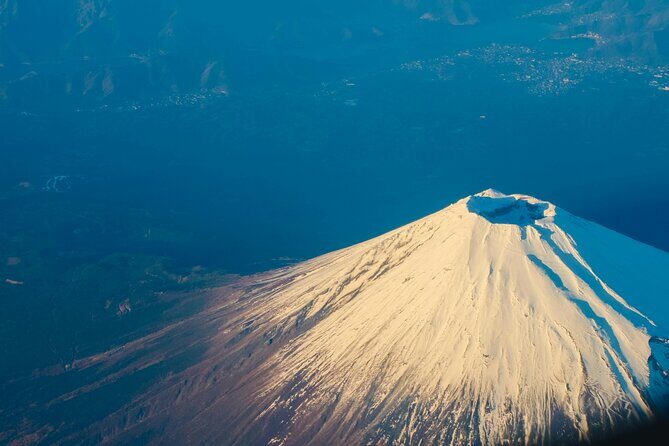
If you want to feel the mountain rather than just see it, Mount Fuji 5th Station is the choice. It’s the most popular starting point for climbers and a scenic stop for visitors.
It sits at about 2,300 meters above sea level. There are shops and restaurants up there, plus a Shinto shrine. It’s often described as a gateway to the Yoshida Trail, which is one of the main routes to the summit.
The stop time is about 30 minutes, and it’s labeled optional with admission not included. In practice, that means you should only add it when you think weather and timing are in your favor. If clouds roll in, the drive up can still be interesting, but you’ll feel the difference in what you can see.
Dress logic: bring warm layers, even if Tokyo feels mild. Higher altitude weather can turn fast.
Aokigahara lava caves: Narusawa Ice Cave and Fugaku Wind Cave
These optional stops are for a specific mood: you want something different from “standing outside and looking at Fuji.”
Narusawa Ice Cave
Narusawa Ice Cave is a lava tube in the Aokigahara forest. It’s about 45 minutes, optional, and admission is not included. It’s one of three larger lava tube caves at the northern foot of Mount Fuji, alongside Fugaku Wind Cave and Lake Sai Bat Cave.
Fugaku Wind Cave
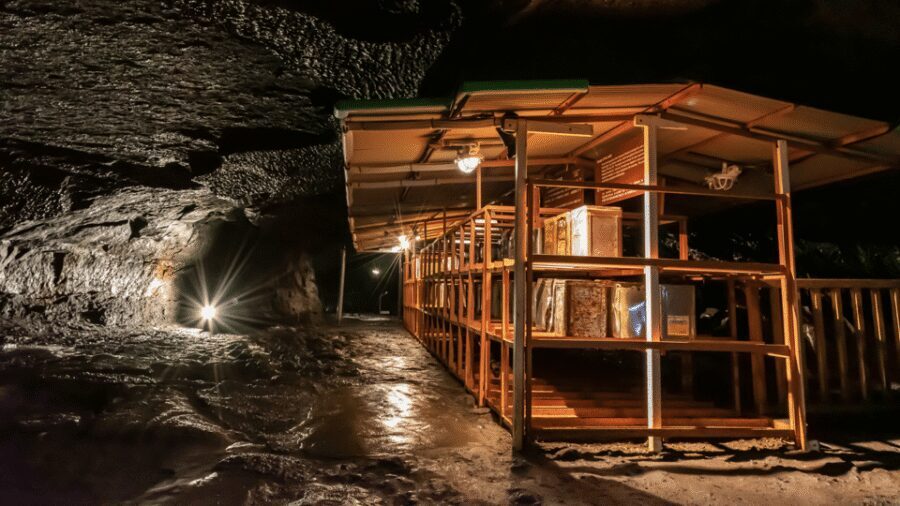
Fugaku Wind Cave is the star if you like quirky science facts. It’s surrounded by the greenery of the Aokigahara Jukai forest. Inside, it’s pleasantly cool even in summer, with an average temperature listed as about 3℃.
It also has a history of practical use. Up until the beginning of the Showa era, it was used as a refrigerator to store silkworm eggs. The cave is designated as a Japanese natural monument. It’s about 201 meters long and 8.7 meters high.
One detail that really makes it memorable: it does not produce an audible echo. Basaltic walls absorb sound. On a typical sight-seeing tour (about 15 minutes), you can see lava shelves, rope-like lava, and ice pillars that don’t melt even in summer.
If you’re visiting during hot months, these caves are a strong reset. If you’re traveling with anyone who dislikes enclosed spaces, skip them and focus on lakeside and shrine areas.
Kogamasao Memorial Park and Itchiku Kubota Art Museum: calmer pace, art-focused payoff
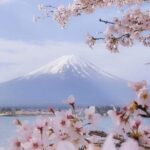
Not every stop has to be a famous “Fuji picture.” Kogamasao Memorial Park is a peaceful option with stunning Mount Fuji views. It’s about 30 minutes, and the area is known for cherry blossoms in spring. It’s a good pick when you want a slower walk and photo time without extra ticket stress.
Itchiku Kubota Art Museum is a cultural stop near Lake Kawaguchiko, also around 30 minutes. Admission is listed as free in the tour details here. The museum showcases the kimono artwork of Itchiku Kubota and highlights his revival of the lost Tsujigahana dyeing technique.
If you care about design and craft, this can be a refreshing change of pace. You’ll be in nature, but the main focus is art—intricate textile designs, unique architecture, and serene gardens.
Tenku no Torii, Gotemba outlets, and Fuji Chobo-no-yu Yurari Onsen
This portion of the day is where you can turn the tour into what you personally need: a photo moment, time for shopping, or an onsen reset.
Tenku no Torii
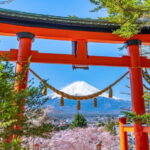
Tenku no Torii is a torii gate on a hillside with a framed view of Mount Fuji. It’s described as popular for sunrise and sunset photos, and the name translates to torii in the sky, hinting at a spiritual gateway feel. It’s optional, about 30 minutes, and admission isn’t included.
Gotemba Premium Outlets
If you want a change from scenery, Gotemba Premium Outlets is about 30 minutes optional time. It’s one of Japan’s larger outlets with over 200 stores, including luxury brands, Japanese retailers, and international labels. There are also dining options and Fuji views in the area.
Fuji Chobo-no-yu Yurari Onsen
After a lot of walking and driving, an onsen can make the whole day feel worthwhile. Fuji Chobo-no-yu Yurari Onsen is near Mount Fuji and offers indoor and outdoor baths with open-air rotenburo options that have panoramic Fuji views.
There are also private baths and a sauna, plus a restaurant. Stop time is about 30 minutes, and admission isn’t included.
If you’re traveling with sore feet or you just want a calm end to the day, this is the best “endcap” option.
Timing tips from real days: how to keep the day from getting swallowed by traffic
Mount Fuji day trips can feel long because the travel time is real. One very practical tip from a past guest: start early enough to leave before 3:30 pm, since it can help you beat traffic.
Also, keep travel from Tokyo to the first sights in mind. From certain central areas like the Tokyo Hilton area, it was noted to take about an hour and forty minutes to reach the first stop. That means your morning plan matters more than you might expect.
My checklist for a smoother day:
- Wear comfortable shoes. Even “easy” stops can include steps and short climbs.
- Bring a light layer. Higher-elevation areas and caves can cool down.
- If your top priority is Fuji photos, focus on fewer stops and give each stop enough time.
Value check: is $465 per group a fair deal?
Price is $465 per group (up to 3 people). That’s important, because the cost doesn’t scale per person the same way a lot of tour types do. In practical terms, if you’re traveling as a small group, this can be a good value compared with paying separately for multiple transit tickets, taxis, or splitting into multiple rides.
What you’re paying for:
- Private transportation in a modern, air-conditioned vehicle
- Highway tolls plus petrol/gas
- An English-speaking driver
- The ability to choose stops and timing within the day’s window
What isn’t included:
- Lunch
- Admission for several optional sites (and some activities have separate fees, like the ship cruise/ropeway at Lake Kawaguchiko)
So the value depends on how you use the “private and flexible” part. If you want to hit just a couple of core Fuji spots and cruise comfortably, you’ll feel like you got your money’s worth. If you want to do everything on the list, the tour can’t create extra hours—so you’ll need to prioritize.
Who this Mount Fuji private car tour is best for
This tour fits best if you want the Fuji highlights without the stress.
It’s a great match for:
- Small groups (up to 3) who want privacy and convenience
- First-time visitors in Japan who would rather not fight transfers
- People who want a custom route instead of a fixed bus itinerary
- Anyone who likes a mix of photos, shrines, lakeside walking, and optional nature/culture add-ons
A bonus: some guests have mentioned guides who can also communicate in Arabic, so if language support matters to you, it’s worth asking about your driver’s language skills when you book.
Should you book it? A quick decision guide
Book it if you want a stress-free Mount Fuji day with hotel pickup, a private car, and the freedom to pick your must-see stops. It’s especially strong if you care about comfort, photo-friendly timing, and not spending your day figuring out transit.
Consider skipping or simplifying your plan if you’re visiting in very busy periods or you know you’ll need to see many optional add-ons. With 8 to 10 hours and real travel time, picking your top priorities will make the day feel smooth instead of frantic.
If you’re the type who needs Fuji views, keep weather in mind. This experience requires good weather, so plan around conditions and set expectations that fog can change what you see.
FAQ
What’s included in the Mount Fuji private car tour?
The tour includes an air-conditioned private vehicle, highway tolls, petrol/gas, and an English-speaking driver. You also get pickup from your Tokyo hotel or apartment, plus a mobile ticket.
How many people can ride in a group?
The price is per group up to 3 people, and it’s private, so only your group participates.
How long is the tour?
Plan on about 8 to 10 hours total.
Where do you get picked up?
Pickup is offered from your Tokyo hotel or apartment.
Are the listed stops guaranteed?
The route is customizable, and many stops are marked optional. Admission for several optional sights is not included, so you’ll want to choose based on your priorities and time.
Does the tour include lunch?
No. Lunch is not included, though there are many restaurant options around Lake Kawaguchiko.
Are there extra fees at Lake Kawaguchiko?
Yes. If you add the ship cruise or ropeway/cable car, the listed cost is about 1,000 yen per person, paid separately.
What if weather is bad?
The experience requires good weather. If it’s canceled due to poor weather, you’ll be offered a different date or a full refund.
What’s the cancellation rule?
You can cancel for free up to 24 hours in advance for a full refund. Changes within 24 hours of the start time aren’t accepted, and late cancellations aren’t refunded.