REVIEW · TOKYO
Private Sightseeing to Mt Fuji and Hakone with English Driver
Book on Viator →Operated by Bravo Japan Tours · Bookable on Viator
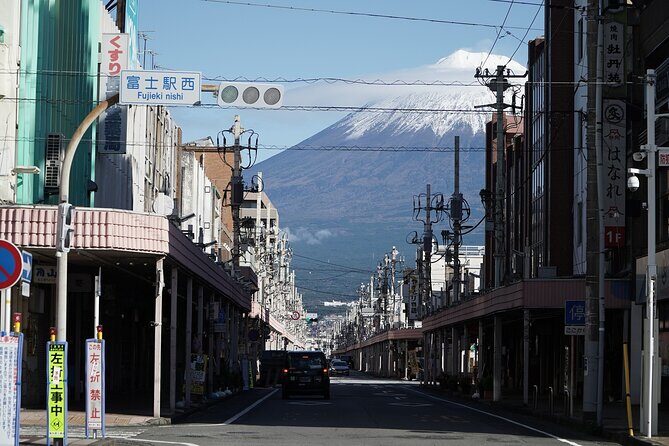
Tokyo to Fuji is a real change of pace. This private day trip turns that into a flexible route with an English driver and door pickup built in. You’ll swap train transfers for one comfortable ride, then hop out at key icons like Chureito Pagoda and Oshino Hakkai.
I especially like the stop plan because it mixes viewpoints with culture and nature: memorial stair-steps at Chureito Pagoda, spring ponds at Oshino Hakkai, and the high-altitude feel of Mt. Fuji 5th Station. Another plus is how much the day can bend around you—your driver can manage timing when crowds and traffic hit, like they did for passengers who started earlier to avoid congestion.
The one drawback to plan for: Mt. Fuji access and road conditions can change with weather and season, and the day can shift if the mountain area is crowded or closures kick in.
In This Review
- Key reasons this private Fuji/Hakone day trip works
- A private English-driver day trip that keeps your day on your terms
- Price and logistics: what $60 covers, and what you’ll likely pay extra
- Chureito Pagoda: WWII memorial stairs and one of Fuji’s most copied views
- Oshino Hakkai: eight springs, a natural monument, and the Diamond Fuji idea
- Kitaguchi Hongu Fuji Sengen Jinja Shrine: quiet context at the mountain’s base
- Oishi Park and the seasonal flower walk you can actually plan around
- Mt. Fuji 5th Station: the closest car-access point, with real-world road limits
- Lake Kawaguchiko: ropeway viewpoints and the hot-spring reset
- How your driver can save the day when traffic and crowds hit
- Weather reality: Fuji needs good conditions, and winter changes everything
- Who should book this private Fuji/Hakone-style day trip
- Should you book this Mt. Fuji and Hakone private day trip?
- FAQ
- Is this tour private, or do I share the vehicle with others?
- What’s included in the price?
- Are tickets for Chureito Pagoda, Oshino Hakkai, and Oishi Park included?
- Is Mt. Fuji 5th Station admission included?
- How long is the tour?
- Will I be able to reach Mt. Fuji 5th Station by car?
- How much is the Fuji Subaru Line toll?
- What happens if weather is poor?
Key reasons this private Fuji/Hakone day trip works
- Private transportation with an air-conditioned vehicle—less friction, more time outside
- English driver who can offer practical suggestions and route help when traffic piles up
- Customizable itinerary: the “suggested” stops can flex to match your group’s pace
- Fuji viewpoints that don’t require climbing: Chureito stairs, 5th Station, and lake observation angles
- Seasonal photo wins like the flower timing around Oishi Park and the Diamond Fuji idea in winter
- Good value for a private day at a low base price, with optional costs you control on the day
A private English-driver day trip that keeps your day on your terms
This tour is built for people who want Mt. Fuji and surrounding highlights without turning the day into a logistics puzzle. It runs about 10 hours, with pickup offered and a private vehicle for just your group—so you’re not stuck waiting on strangers or racing a rigid schedule.
Because it’s private, the itinerary is more like a menu than a marching order. You’ll be given a suggested flow, but the driver can typically help you choose the right order, especially when weather and crowds decide to be unpredictable.
The big win here is the combination of “iconic stops” plus breathing room. You’re not only chasing one photograph—you’re moving through different angles of the mountain, plus shrine and lake areas that give context to why Fuji matters in Japanese art and culture.
Other Mount Fuji tours we've reviewed at Mt Fuji & Kawaguchiko
Price and logistics: what $60 covers, and what you’ll likely pay extra
The base price is listed at $60, and it covers private transportation and an air-conditioned vehicle (with an English driver). That’s a strong starting point for a full day from Tokyo, because you’re buying convenience and control, not just a checklist.
Just keep expectations clear: all fees and taxes are not included. That matters for two reasons. First, Mt. Fuji 5th Station has a ticket that’s specifically marked as not included. Second, some road access and optional transport can add costs—most notably the Fuji Subaru Line toll, listed at 2,100 yen, and any add-ons you choose once you’re there.
One more practical note: the Fuji Subaru Line can close in winter due to snow, and during peak climbing season (the dates given are July 5 to Sept 10 in 2024), the road is closed to private vehicles. Shuttle buses run between designated parking lots and the 5th Station, so your driver may adjust how you reach it.
In plain terms: expect a smooth day if you’re flexible. If you’re arriving with a hard timeline and one fixed “we must get to the top at exactly X time” goal, you may need to compromise.
Chureito Pagoda: WWII memorial stairs and one of Fuji’s most copied views
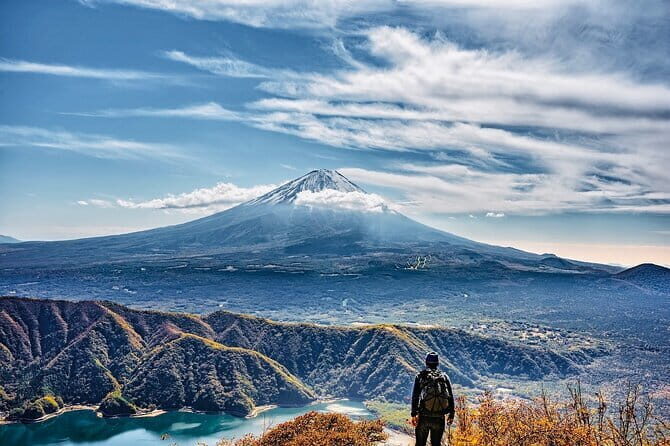
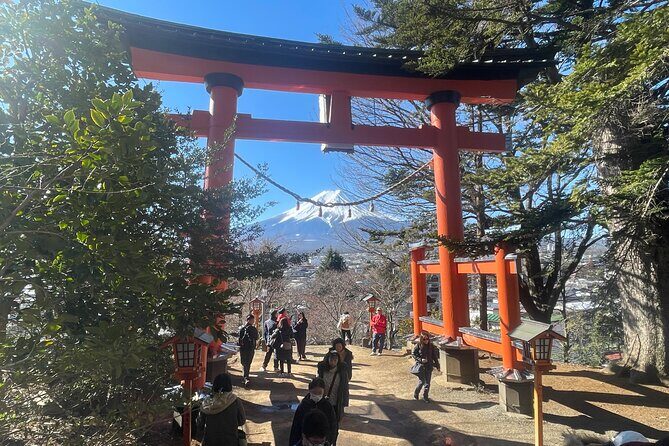
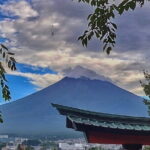
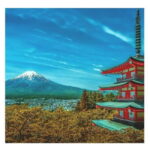
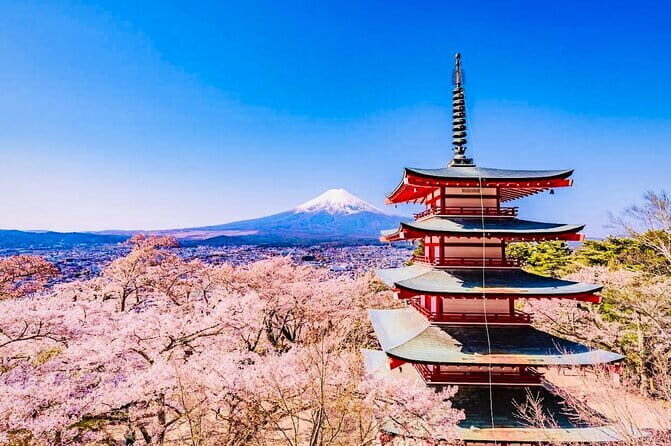
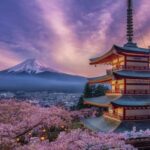
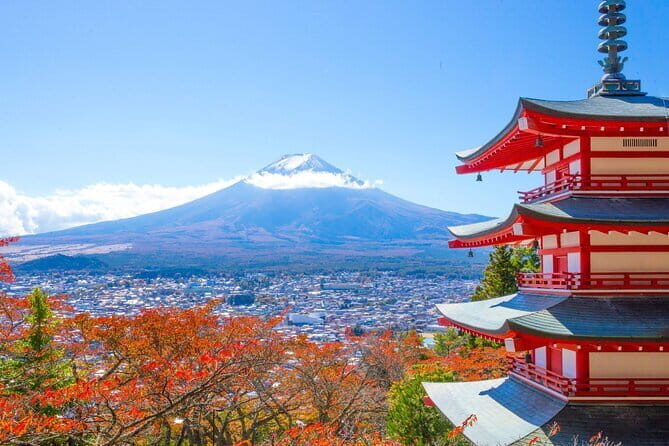
Chureito Pagoda is one of the first places I’d send anyone chasing a classic Fuji photo. It sits in a peace memorial park with Shinto shrines, and the approach includes up to about 400 stairs—not hard for most people, but it does mean you should bring comfortable shoes.
What makes this stop more than a postcard is the meaning attached to it. The pagoda at the top was built in memory of soldiers and civilians who lost their lives in World War I and II, which gives the view a heavier, thoughtful tone than purely scenic spots.
Time-wise, you’re looking at about 50 minutes here with admission free. That’s plenty for the views at different elevations and for a slow walk that lets you actually notice the shrine spaces instead of sprinting to the best angle.
The practical tip: go with the expectation that your best photo comes from you changing where you stand, not from arriving in one perfect spot. The park’s design encourages you to explore upward and around.
Oshino Hakkai: eight springs, a natural monument, and the Diamond Fuji idea
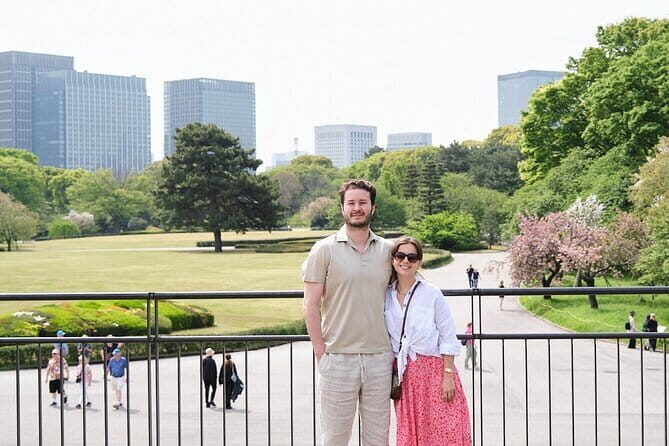
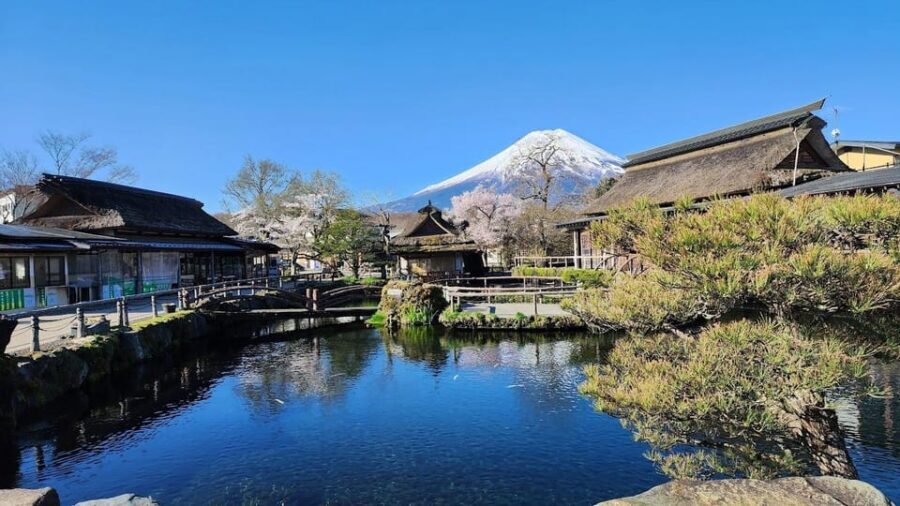
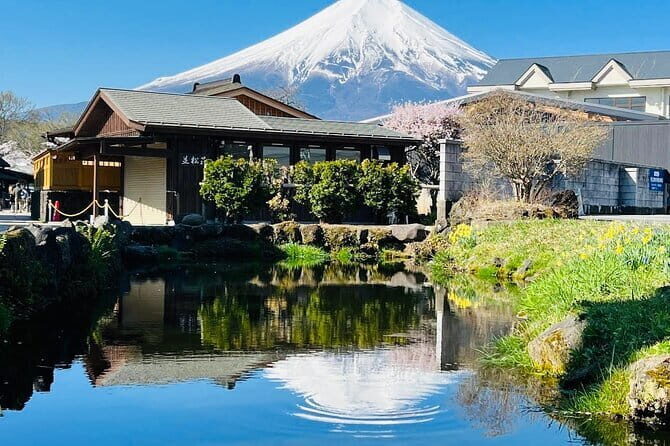
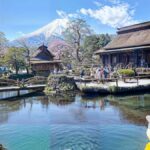
Next is Oshino Hakkai, a cluster of eight springs fed by an aquifer system associated with Mt. Fuji. This area is described as a natural monument of Japan and part of the Mt. Fuji World Heritage Site, so it’s not just pretty water—it’s a protected landscape shaped by how Fuji feeds the region.
You’ll have about one hour, and admission is listed as free for the main area. The ponds and pathways let you move at an easy pace, with the largest pond surrounded by an open-air museum area called Hannoki Bayashi Shiryokan (this part has a small admission fee).
One of the coolest ideas here is the “Diamond Fuji” phenomenon in winter. The concept is simple but timing-dependent: the rising or setting sun aligns so that the caldera shape seems to “cup” the sun. The catch is that it can only be seen from certain places due to Earth’s position, so don’t treat it like a guaranteed show.
If your trip is outside winter, you’ll still get the core experience: clear spring water and Fuji reflected in the ponds when conditions cooperate. Either way, Oshino Hakkai is a great reset after the stairs at Chureito because you switch from ascent-and-view to still-water-and-details.
Kitaguchi Hongu Fuji Sengen Jinja Shrine: quiet context at the mountain’s base
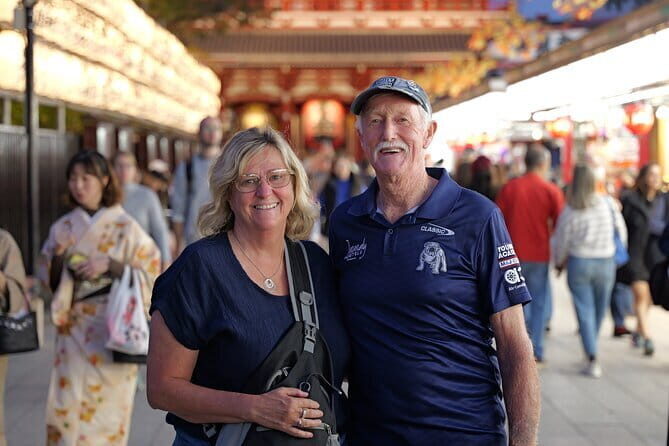
The itinerary includes Kitaguchi Hongu Fuji Sengen Jinja Shrine, a Shinto shrine at the mountain’s base area. It’s about 30 minutes and free to enter, which makes it an easy add-on even if you’re pacing the day carefully.
This stop is valuable because it changes your “Fuji brain” from scenery mode to meaning mode. You see how the mountain is framed through religious and cultural practice, not just through sightseeing.
Because the day is private and adjustable, this is also the kind of stop you can expand or shrink. If your group is shrine-curious, you can linger. If you’re primarily there for views, you can keep it quick and get back into nature and photo angles.
Other Mt Fuji and Hakone combo tours at Mt Fuji & Kawaguchiko

Oishi Park and the seasonal flower walk you can actually plan around
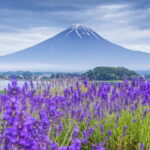
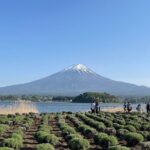
Oishi Park is one of the best “walk for views” choices on a Fuji day. It sits on the north shore of Lake Kawaguchiko, and you get framed looks at Mt. Fuji with the lake in the foreground.
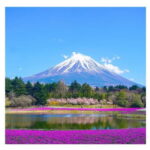
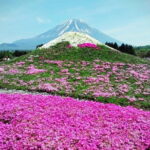
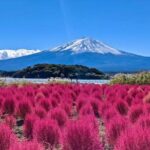
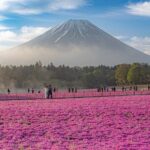
You’ll likely have about 30 minutes here, with admission free. The park has a roughly 350m walking path, and the big advantage is that flower timing is spelled out clearly. From early April to late May, moss phlox can spread like a pink carpet. Late June into late July brings lavender. And mid to late October shifts to red kokia shrubs.
That seasonal calendar matters because it helps you match your expectations to the month you’re going. If you visit at the wrong time, you’ll still get the mountain and lake views, but you’ll miss the specific color show.
This stop is also where food and activity options show up. The area includes the Kawaguchiko Natural Living Center, which offers things like fruit jam making and an all-you-can-eat cherry & blueberry picking course. There’s also a café where you can try blueberry ice cream, which is the kind of small indulgence that feels worth it on a day trip.
Even if you skip the picking, Oishi Park works because it gives you an easy scenic walk without requiring a big time investment.
Mt. Fuji 5th Station: the closest car-access point, with real-world road limits
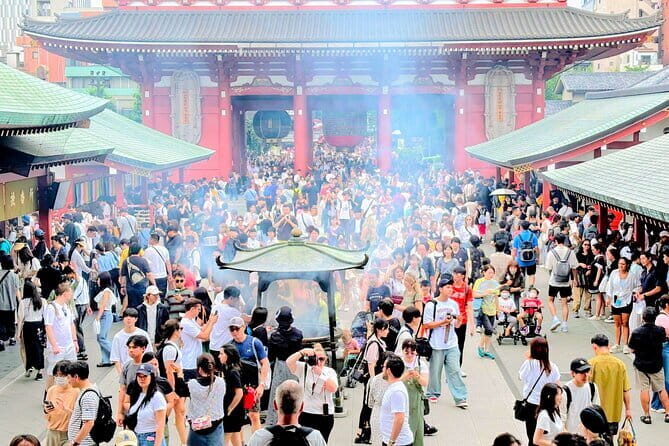
The star stop for many people is Mt. Fuji 5th Station, accessible by car to about 2,200m. It’s about one hour on-site, and it’s marked as not included for admission/ticketing.
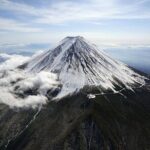
This is the closest point you can reach by vehicle that still gives that “up near the mountain” feeling. If you’re not climbing the full summit route, the 5th Station is the next-best experience: crisp air, sparse vegetation, and city views from higher vantage points.
But the logistics around it are where you need to stay flexible. The route uses the Fuji Subaru Line, which includes a 2,100 yen toll, and in winter, parts can close for heavy snow. During July 5 to Sept 10, 2024, the mountain road is closed to private vehicles for much of the climbing season, and shuttle buses take visitors from the base parking lots to the 5th Station.
Translation for your planning: you might not drive exactly as you pictured, especially in peak season. That doesn’t ruin the day—it just means the driver will coordinate the approach with the current access rules.
If you care about maximizing your time, ask your driver to prioritize arriving at a workable hour. Even in good weather, crowds can shape what you can see comfortably in the time window.
Lake Kawaguchiko: ropeway viewpoints and the hot-spring reset
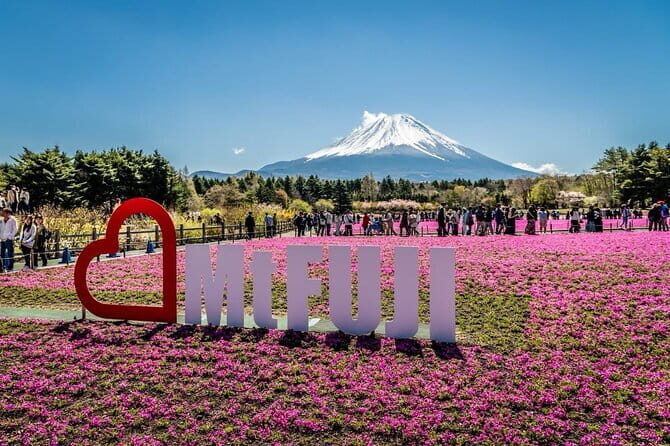
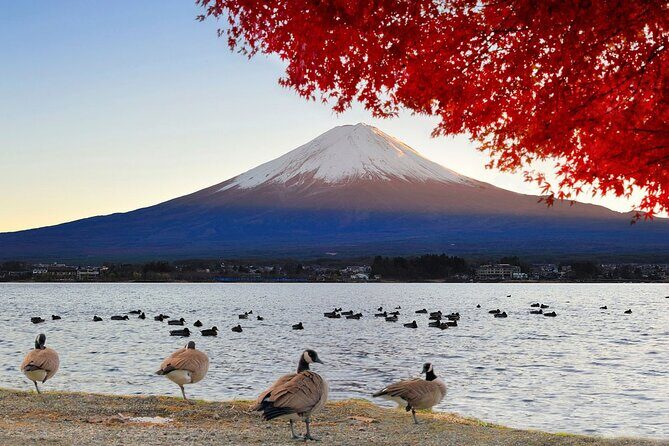
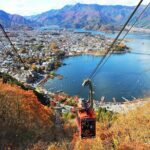
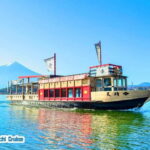
After the height of 5th Station, you drop back down to Lake Kawaguchiko, described as the second-largest of the Fuji five lakes. It’s a logical payoff because the lake gives wide, calm views and a chance to breathe after time higher up the mountain.
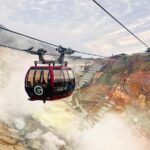
You’ll have about one hour here, and the main stop is listed as free. The itinerary calls out the Kachi Kachi Ropeway, which ascends to an observation point near Mount Tenjo—a viewpoint setup that can improve the odds of seeing Fuji clearly depending on cloud cover and sightlines.
Hot springs are also mentioned in the area, which is useful if your group wants a recovery moment. The key is that your tour keeps moving, so a hot-spring break may depend on your timing and how long you want to spend at other photo points.
Lake Kawaguchiko works well because it’s both scenic and practical. It gives you a final “Fuji framed by water” experience, plus optional ways to add height (ropeway) or comfort (onsen) without committing to a full hike.
How your driver can save the day when traffic and crowds hit
This kind of trip lives or dies by timing. The good news: with a private vehicle, your driver can often reduce wasted time by taking alternate routes and adjusting stop order.
One example from the kinds of feedback this tour gets: a driver named Bajwa contacted passengers the evening before and suggested departing at 7am instead of 8am to avoid traffic. That kind of small schedule shift can be the difference between smooth entry into the most popular photo spots and getting stuck behind slow buses.
Another pattern I’d plan for: even with a private tour, Fuji-area roads can get crowded. A driver named Ali was described as great at minimizing travel time by using alternate routes, but also managing the reality that crowd levels can limit how many stops you comfortably complete.
So here’s my practical advice: go into the day with a flexible mindset. If your driver suggests trimming a stop slightly to protect the best views elsewhere, that’s not a compromise—it’s smart time management in a place where visibility and crowd behavior matter.
Weather reality: Fuji needs good conditions, and winter changes everything
The tour requires good weather, and if it’s canceled due to poor weather you can expect to be offered a different date or a full refund. That’s not bureaucracy; it’s how you protect your chance of seeing Mt. Fuji clearly.
Even with good weather, fog and clouds can steal the view, especially around higher elevations. If the summit area is hidden, you’ll still get shrine and lake experiences, but your photo payoff may be lower.
Winter is also a special case because road access can be affected by snow, and some parts of the route may close temporarily. On the bright side, winter is also the season associated with the Diamond Fuji alignment idea—so if you’re traveling then, you’ll have a stronger shot at that specific phenomenon, even though it’s still dependent on the exact viewing position and timing.
Who should book this private Fuji/Hakone-style day trip
This is a good fit if you want:
- Private transportation and less hassle than trains and transfers
- An English-speaking driver for navigating timing and making on-the-fly decisions
- A day that mixes views, shrines, and lake scenery instead of only one location
It’s especially well-suited for families, older travelers who still want the Fuji experience without climbing, and groups who don’t want to gamble on public transport schedules on a long day.
If you’re the type who loves building an itinerary from scratch and using trains to hop between sights quickly, you might feel the price isn’t essential. But if comfort and control matter to you, the value proposition is strong.
One more tip: because this is private, you should treat your driver as your day’s problem-solver. If you have a must-see priority—like getting the best possible look from 5th Station or maximizing flower-season color—tell them early so they can shape the order around your goals.
Should you book this Mt. Fuji and Hakone private day trip?
If your goal is to see Mt. Fuji with minimal stress, I think this is an easy “yes” to consider. For the base price, you’re getting a private vehicle, pickup support, and English help—then you choose how long to linger at standout stops like Chureito Pagoda and Oshino Hakkai.
Book it if:
- You want a flexible route with private control
- You’re traveling at a time when you want the best chance at clear mountain views
- You prefer convenience over planning every transfer
Pass or adjust expectations if:
- You’re traveling during a season when roads to 5th Station may face closures or shuttle-only access
- You need a strict, non-negotiable minute-by-minute schedule
- You’re expecting all museum and station costs to be included in the base price
If you go in with flexibility and good weather odds, this is the kind of day trip that feels efficient without feeling rushed.
FAQ
Is this tour private, or do I share the vehicle with others?
It’s a private tour. Only your group participates, and you’ll have private transportation in an air-conditioned vehicle.
What’s included in the price?
The included items are private transportation and an air-conditioned vehicle, plus the English driver service. All fees and taxes are not included.
Are tickets for Chureito Pagoda, Oshino Hakkai, and Oishi Park included?
For the listed stops, admission is marked as free for Chureito Pagoda, Oshino Hakkai, Kitaguchi Shrine, and Oishi Park.
Is Mt. Fuji 5th Station admission included?
No. Mt. Fuji 5th Station is listed as having admission ticket cost not included.
How long is the tour?
The duration is approximately 10 hours.
Will I be able to reach Mt. Fuji 5th Station by car?
You can access the 5th Station by car via the Fuji Subaru Line, but the route can have seasonal restrictions. The information provided notes road closures to private vehicles during the climbing season (July 5 to Sept 10, 2024) with shuttle buses operating between designated lots.
How much is the Fuji Subaru Line toll?
The Fuji Subaru Line toll is listed as 2,100 yen.
What happens if weather is poor?
The experience requires good weather. If it’s canceled due to poor weather, you’ll be offered a different date or a full refund.