REVIEW · TOKYO
Mount fuji and Hakone Full day private sightseeing tour
Book on Viator →Operated by Tokyo Top Travel · Bookable on Viator
A day like this is a road-trip for your eyes. You get a private driver from Tokyo plus big scenery in Hakone and Mt. Fuji, without wrestling trains.
I especially like two things: an English-speaking guide who can explain what you’re seeing as you move, and the mix of “water + volcano” stops like the Lake Ashi cruise.
One thing to plan around: Mt. Fuji visibility depends on weather, and the day can shift if clouds roll in.
In This Review
- Key highlights that make this tour work
- A private Fuji-and-Hakone day without the train math
- Timing and weather reality for Mt. Fuji
- How the day flows: a route that mixes culture, nature, and volcano heat
- Stop 1: Kitaguchi Hongu Fuji Sengen Jinja Shrine in the cedar forest
- Stop 2: Oshino Hakkai’s 8 spring ponds and koi views
- Stop 3: Saiko Iyashi no Sato Nenba for a throwback village feel
- Stop 4: Hakone Jinja’s floating torii moment on Lake Ashi
- Stop 5: Owakudani Kurotamago Kan for sulphur fumes and black eggs
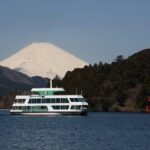
- Stop 6: Lake Ashinoko and the pirate boat ride for Fuji views
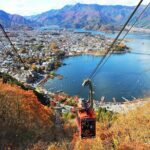
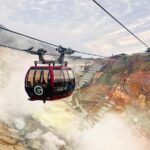
- Stop 7: Togendai Station area and a cable car view (extra ticket)
- Stop 8: Hakone Open-Air Museum for sculpture and a hot spring touch
- Stop 9: Odawara Castle as a calm finish
- Price and value: what $380 buys for up to 5 people
- Who should book this day trip, and who might not love it
- Should you book Mount Fuji and Hakone with a private guide?
- FAQ
- How many people are in a private group?
- How long is the tour?
- Is Mt. Fuji’s 5th Station included?
- What’s included for Hakone and Lake Ashi rides?
- Are entry fees included at every stop?
- Does the tour include pickup?
- Is bottled water provided?
- Is the kimono experience included?
- What happens if the weather is poor?
Key highlights that make this tour work
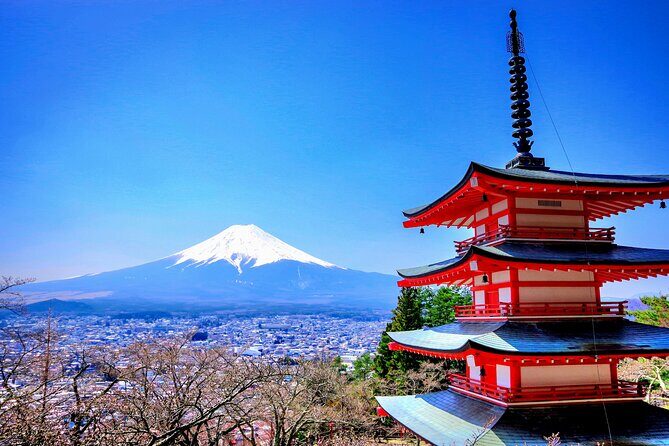
- Private group (up to 5): you set the pace instead of getting herded.
- Hakone Ropeway and Lake Ashi cruise: classic views, timed as part of a full-day route.
- Active-volcano stop at Owakudani: sulphur fumes and the famous black eggs.
- Shrines and spring ponds: you start with spiritual Mt. Fuji framing, then move to water and wildlife.
- Multiple “Fuji angles”: you’re not stuck with one viewpoint all day.
- A long day done efficiently: about 10 hours, with pickup to cut out transit stress.
A private Fuji-and-Hakone day without the train math
If you’ve ever tried to piece together Hakone from Tokyo using public transit, you already know the problem: the best parts are far apart, and connections can burn hours. This tour’s big value is simple—one driver, one plan, and time spent outside the car instead of in stations.
For me, the best part is how the day is built for comfort. You’re in a private vehicle, and the schedule is dense enough that you actually feel like you escaped Tokyo, not just drove to a closer suburb.
You’ll also benefit from having an English-speaking guide who can connect the dots as you go—why a shrine matters here, what those ponds are about, and what you’re really looking at in volcanic zones. And because it’s private, you can ask quick questions on the spot instead of saving them for the end of a bus ride.
The one caution: because this is a long day, it runs like a sprint, just with snacks and viewpoints. If you prefer slow travel with lots of free time, you might feel the pressure by mid-afternoon.
Other Mount Fuji tours we've reviewed at Mt Fuji & Kawaguchiko
Timing and weather reality for Mt. Fuji
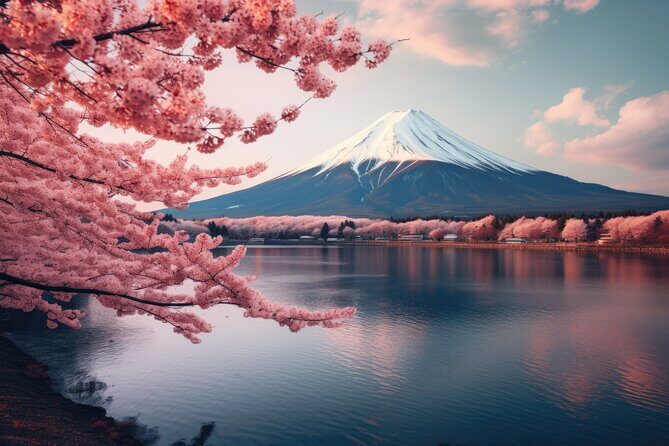
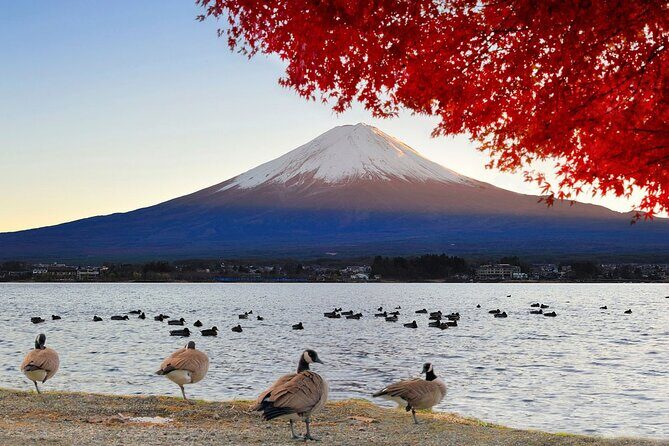
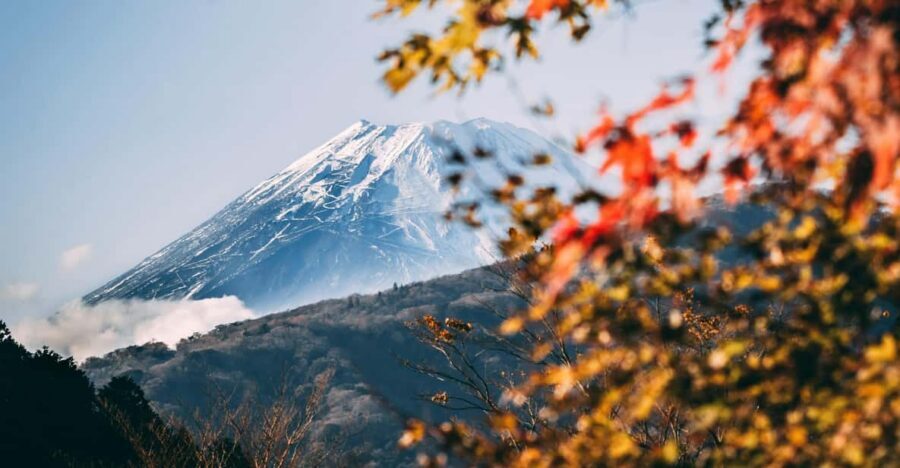
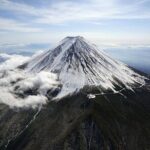
This experience is designed for a “good-weather” day. That matters because Mt. Fuji is famous, but it’s also shy—clouds and haze can hide the peak even when you’re doing everything right.
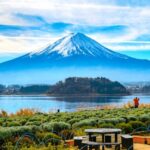
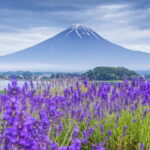
So treat visibility as a coin you flip, not a guarantee. When conditions cooperate, the payoff is huge: you’ll see Fuji framed from lakes, viewpoints, and shrine settings. When clouds win, you still get a full day of Hakone’s volcanic drama and classic Fuji-region stops.
Plan for a very full schedule. The tour runs about 10 hours, and you’ll be spending real time on the road between Tokyo and the Fuji/Hakone area. In practice, that means you’ll want to settle in, keep your camera handy, and be ready to walk a bit at each stop.
If you care a lot about seeing the mountain, I’d take one tactical approach: ask your guide early which spots are most likely to work that day. Some guides will also adjust timing to reduce waiting and crowds when possible, especially around major scenic areas.
How the day flows: a route that mixes culture, nature, and volcano heat
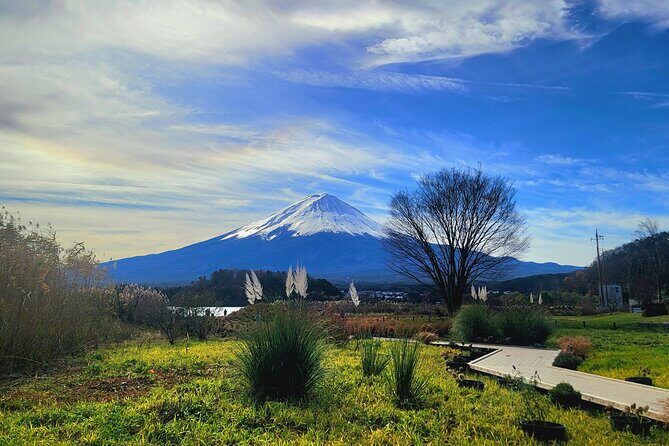
The day has a clear rhythm: start with Fuji’s spiritual side, continue into lakes and villages, then shift into Hakone’s volcanic core. By the time you reach Owakudani, you’ve earned it—you’ve warmed up with shrines, springs, and traditional areas, then you get the real “this is Japan’s geology” moment.
You’ll also hit Mt. Fuji’s 5th Station as part of the overall plan. That’s one of the reasons this tour feels different from a simple Hakone day trip; you’re not only staying low and looking up. A high-altitude stop gives you that sense of scale that’s hard to get from the city.
One practical note: the tour includes bottled water, but meals and many entry items are extra. That’s not a dealbreaker—just means you should budget for lunch on the go and plan to pay at places where entry isn’t listed as free.
The private format also helps here. You can usually spend less time stuck in lines and more time where you actually want to be—like hovering by a lake viewpoint for one extra clear minute.
Stop 1: Kitaguchi Hongu Fuji Sengen Jinja Shrine in the cedar forest
This is where the Fuji story starts—literally at the foot of the mountain. Kitaguchi Hongu Fuji Sengen Jinja Shrine sits on the north side base area, and it’s old by Japanese standards: the shrine dates to around 100 A.D.
What I love about this stop is the setting. You’re walking in dense cedar and pine woods, and that forest atmosphere is part of the experience, not a side note. There’s also mention of an extremely old cypress tree in the main hall area, tied to the shrine’s long timeline.
The stop is listed as about 1 hour, and admission is free. That makes it a great early anchor: you start the day grounded and calm, before the car pulls you into the more crowded scenic zones.
A small consideration: if you’re short on patience for quiet, outdoor walks, you might want to treat this as a “see it, respect it, move on” stop. But if you like temples and getting your bearings, this one is a strong start.
Stop 2: Oshino Hakkai’s 8 spring ponds and koi views
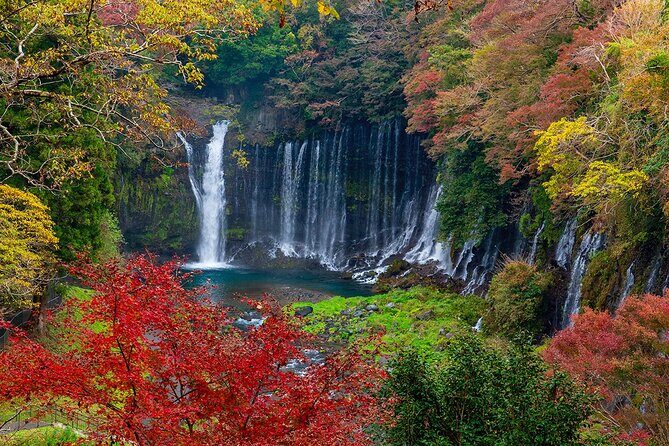
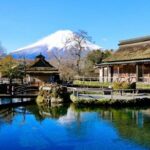
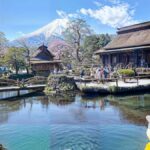
Next up is Oshino Hakkai, a classic Fuji-region visit. It’s described as a roughly 300-year-old village built around eight natural spring ponds where you can see koi fish.
What makes this stop worth your time is how “Fuji” it feels. The ponds and pathways create a slow, pretty walk, and it’s easy to pop into the small streets for souvenirs and snacks. There’s also a traditional food street vibe here, and the mountain views can pop through depending on the day.
This stop is also listed as free and about 1 hour. That duration is about right—long enough to stroll and photograph, short enough that you don’t waste daylight before Hakone.
If your main goal is mountain views, keep an eye on where you stand. Fuji photos from this kind of area often depend on angle and cloud breaks, so shifting your position slightly can matter.
Other Mt Fuji and Hakone combo tours at Mt Fuji & Kawaguchiko

Stop 3: Saiko Iyashi no Sato Nenba for a throwback village feel
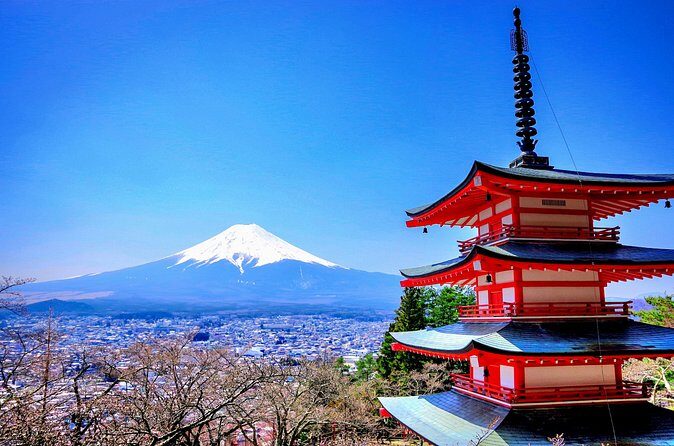
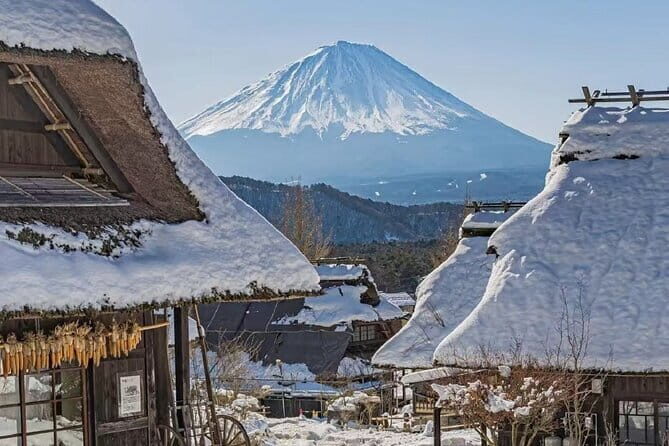
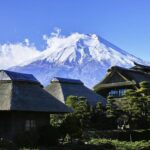
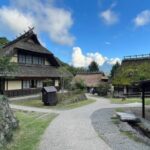
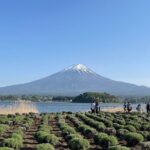
After Oshino Hakkai, the tour heads to Saiko Iyashi no Sato Nenba around the Lake Saiko area. This is a traditional village concept focused on thatched-roof buildings and a preserved style of old Japan.
You’ll likely see plenty of food stalls, and there’s an option for a kimono experience. Admission here is listed as not included, so you’ll want to budget for any extra add-ons you choose.
This is a good stop if you want something more “storybook” than scenic. It’s not just a viewpoint; it’s a living-style presentation of architecture and village atmosphere.
The tradeoff: because admission is extra, you’re paying for the cultural setting. If you’re already temple- and village-saturated early in your trip, you might want to keep your time focused and skip optional extras.
Stop 4: Hakone Jinja’s floating torii moment on Lake Ashi
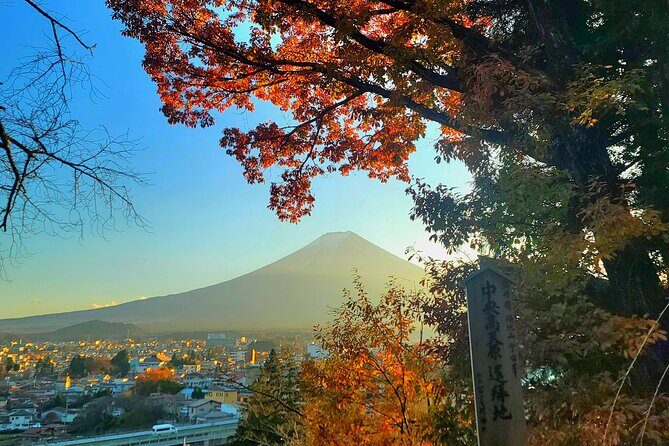
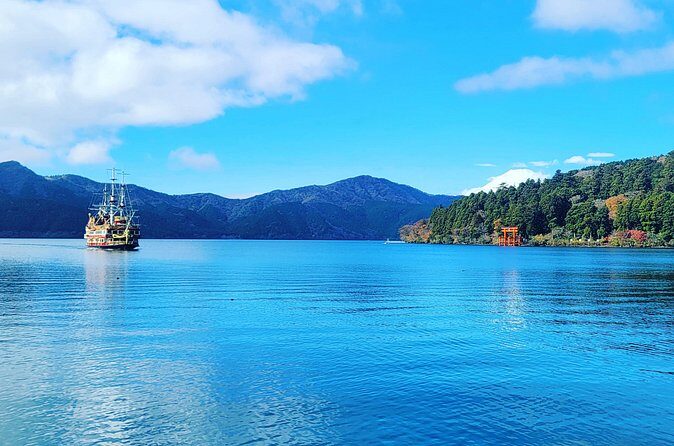
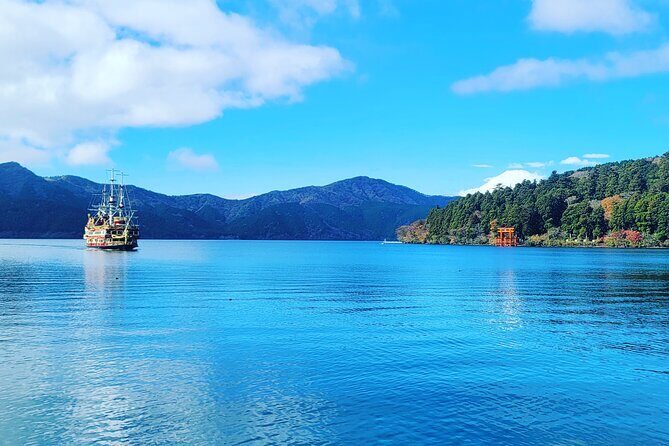
Then comes one of Hakone’s most recognizable images: Hakone Jinja with its orange floating torii gate. This is a short stop (about 30 minutes) and it’s listed as free.
The appeal here is visual and immediate. You’ll get a classic “torii over the water” frame, and it works especially well if the sky clears. Even on less-than-perfect days, the lake setting can still feel serene and photogenic.
Because time is limited, treat this stop like a photo-and-walk sprint. Stand where the guide tells you to stand, then circle once for a second angle if you have time.
Stop 5: Owakudani Kurotamago Kan for sulphur fumes and black eggs
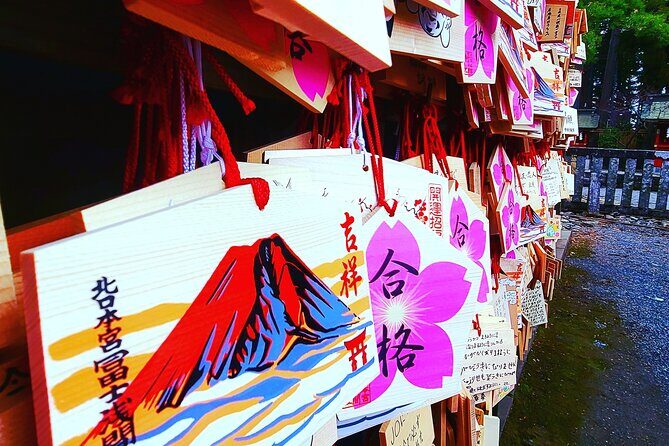
Here’s the stop that turns the day from scenic to surprising. Owakudani is tied to Hakone’s volcanic activity, with mention of an eruption nearly 3,000 years ago. You’ll smell the sulphur and see the geothermal vibe up close.
At Owakudani Kurotamago Kan, the famous feature is the black eggs. This is listed as about 1 hour with admission free, which is great because you can spend time here without worrying about another ticket.
What I like about this stop is that it’s not abstract. You’re seeing the effects of active geology in real time, and the geothermal environment makes the whole area feel alive.
One practical consideration: sulphur air can be intense. If you’re sensitive to strong smells, keep some distance when you need to, and use the time to look first, then move in.
Stop 6: Lake Ashinoko and the pirate boat ride for Fuji views
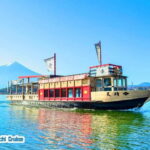
Next is Lake Ashinoko with the chance to do a pirate boat ride. This is listed as about 1 hour and admission for this stop is free.
This part is all about views. If Mt. Fuji appears, it tends to look dramatic from the water, and being out on the lake changes the angle in a way photos don’t always capture.
Even if Fuji is partly hidden, the lake ride still gives you a break from road time. It’s a “reset” before you go up, down, and into more Hakone sightseeing.
I’d use this hour strategically: take a few photos, then watch instead of constantly shooting. Clear breaks in clouds don’t last forever.
Stop 7: Togendai Station area and a cable car view (extra ticket)
At Togendai Station General Information Center, the plan includes a cable car ride from the lake side with Fuji views. This stop is listed as about 30 minutes, and the admission ticket is not included.
This is the kind of add-on that can be worth it if your goal is elevation. A short ride like this can make the difference between seeing Fuji as a distant symbol and seeing it as a massive presence.
But because it’s not included, you should decide based on how much you care about the viewpoint versus keeping costs down. If you’re already seeing Fuji from multiple angles today, you might choose to skip it if you’re price-sensitive.
Stop 8: Hakone Open-Air Museum for sculpture and a hot spring touch
Then there’s Hakone Open-Air Museum, listed for about 1 hour. It’s an outdoor sculpture park with some indoor exhibits, plus a note about a natural hot spring element.
Admission is listed as not included here. That makes it a “choose-your-own-adventure” stop depending on what you like. If you enjoy modern art and outdoor museum wandering, this can add a different texture to your day. If you’re mostly there for Fuji and classic scenery, the museum may feel like a slower segment.
The good news: the time is capped to around an hour, so you won’t lose your entire afternoon to ticketed attractions.
One tip: if the weather is unstable, the museum can be a good fallback. Outdoor sections still matter, but having indoor options helps if conditions change.
Stop 9: Odawara Castle as a calm finish
You wrap up with Odawara Castle, described as a small, sturdy castle with exhibits and artifacts, plus views from the tower. This stop is about 1 hour, and admission is listed as free.
This ending works because it’s less frantic than the volcano zone. It’s also a nice way to end on a city-side historical note before you head back toward Tokyo.
If you’re tired, this is the kind of finish where you can pace yourself—look at the exhibits, then use the tower views when you feel ready.
A consideration: castle grounds can involve walking and stairs. If you’re booking with kids or anyone with limited stamina, pace your tower time early rather than waiting until you feel wiped out.
Price and value: what $380 buys for up to 5 people
The price is $380 per group for up to 5 people. That structure is the core value play: you’re paying for private driving and a guided full-day routing, not per-seat sightseeing.
How that feels for your budget depends on your group size. If you’re splitting five ways, the per-person cost drops a lot compared with buying separate tickets and transit all day. If you’re only two people, it’s more of a premium outing—but it can still beat the headache cost of DIY when Fuji/Hakone schedules get tight.
Also remember what’s not included. Bottled water is provided, but meals and entry fees are extra, and some specific stops clearly list admission as not included. So think of the $380 as transportation plus guide and the overall plan, with you budgeting for the add-ons you choose.
In return, you get the best “time value” feature: you can pack in a shrine, spring ponds, a lake and ropeway/cruise experience, a volcano stop, and a castle in one day without bouncing between train routes.
Who should book this day trip, and who might not love it
You’ll likely love this if you want maximum Fuji-region coverage in one day and you hate transit stress. It’s also a solid choice for families, because the private vehicle reduces the constant splitting up and regrouping you get on group tours.
It’s especially attractive if you care about getting multiple perspectives—Fuji views from different spots rather than a single hero photo. The plan includes Mt. Fuji’s 5th Station and then several Fuji-framing areas, plus a big Hakone geology stop.
You might want to look elsewhere if you prefer a slow itinerary with long downtime between stops. This route is full, and a “quick stop” format can feel tight if you like to linger everywhere.
And keep your flexibility in mind. On days where Fuji gets hidden, you’ll still have Hakone highlights, but your “mountain reward” may vary.
Should you book Mount Fuji and Hakone with a private guide?
I’d book it if your priority is comfort plus visibility odds plus variety. The private format, English guidance, and the way the day mixes cultural stops with Hakone’s volcanic energy make it one of the more efficient ways to do this region from Tokyo.
Before you lock it in, I’d do one simple thing: set your must-sees in advance (like the 5th Station and Owakudani) and ask your guide which route adjustments make sense for your weather day. If you can do that, you’ll get the best chance at a Fuji peak moment and still enjoy a full, well-rounded day even if clouds interfere.
FAQ
How many people are in a private group?
This is a private tour, and the group size is up to 5 people.
How long is the tour?
The duration is about 10 hours.
Is Mt. Fuji’s 5th Station included?
Yes, the overall plan includes Mt. Fuji’s 5th Station.
What’s included for Hakone and Lake Ashi rides?
The tour includes the Hakone Ropeway and a cruise on Lake Ashi. It also includes a pirate boat ride experience on Lake Ashinoko.
Are entry fees included at every stop?
Not all stops include admissions. Some listed stops have free admission, while others are marked as not included (such as Saiko Iyashi no Sato Nenba, Togendai Station cable car ride, and the Hakone Open-Air Museum).
Does the tour include pickup?
Pickup is offered, and your guide meets you for the start of the day.
Is bottled water provided?
Yes, bottled water is provided.
Is the kimono experience included?
The kimono experience at Saiko Iyashi no Sato Nenba is available, but the stop’s admission is listed as not included, so you should expect extra costs for that activity.
What happens if the weather is poor?
This experience requires good weather. If it’s canceled due to poor weather, you’ll be offered a different date or a full refund.