REVIEW · FUJIKAWAGUCHIKO
Tokyo: Mt. Fuji Highlights Tour with Lake Kawaguchi Cruise
Book on GetYourGuide →Operated by LION TRAVEL JAPAN Co. Ltd. · Bookable on GetYourGuide
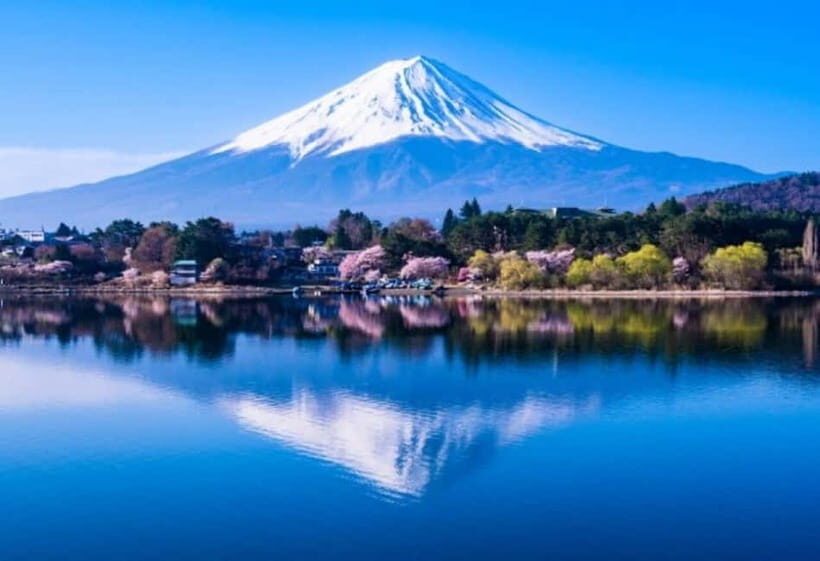
Fuji photos start before the mountain appears. This 10-hour tour strings together the classic Mt. Fuji viewpoints in one efficient day—especially Arakurayama Sengen Park with its dramatic climb and panoramic platform, and the Appare Lake Kawaguchi cruise for big, open-deck views.
What I like most is that you get Fuji from multiple angles, with photo spots timed around the light and season. One possible drawback: the day is long, you’ll walk a fair bit (including 398 steps), and if clouds roll in you may not get the mountain in all its glory.
In This Review
- Key Highlights You’ll Actually Care About
- Ginza Departure and the 2.5-Hour Ride to Fuji
- Arakurayama Sengen Park: 398 Steps to Fuji-Yoshida’s Photo Platform
- Shimoyoshida Honcho Street for Fuji-Facing Townscape Photos
- Oshino Hakkai: Eight Ponds Fed by Snowmelt and Framed by Forest
- Lake Kawaguchiko Cruise on the Appare Warship-Style Boat
- Oishi Park: Seasonal Color Plus the November Maple Corridor Swap
- Guide, Language, and the Real World of English Coverage
- Price and Value: Why $79 Makes Sense for a Full Fuji Day
- Getting the Best Fuji Photos: A Simple Game Plan
- Who This Tour Fits Best (and Who Might Prefer Something Else)
- Should You Book This Mt. Fuji Highlights Tour?
- FAQ
- FAQ
- Where do I meet for the tour?
- How long is the tour?
- What is included in the price?
- Is lunch included?
- What boat is used on Lake Kawaguchiko?
- How many steps do you climb at Arakurayama Sengen Park?
- What happens to Oishi Park during early November?
- What languages are available for the live guide?
- Can I cancel and get a full refund?
- What should I bring?
Key Highlights You’ll Actually Care About
- 398 steps at Arakurayama Sengen Park to reach the Fuji-Yoshida overlook
- Yoshida Honcho Street photo walk with Fuji-facing townscape angles
- Oshino Hakkai’s eight spring ponds fed by snowmelt from Mt. Fuji
- Appare cruise on Lake Kawaguchiko with open deck views and a Japanese-style cabin
- Oishi Park seasonal scenes, plus a November replacement when autumn foliage runs
Ginza Departure and the 2.5-Hour Ride to Fuji
Most people think Mt. Fuji Day Trips start when you reach the first viewpoint. This one starts earlier—at TOKYU PLAZA GINZА 1F, where you’ll meet up and get rolling. The coach ride is about 2.5 hours, which matters because it sets expectations: you’re committing to a full-day loop, not a quick stop-and-snack.
I like that the travel plan is simple. You get a bus/coach, a guide, and a structured route through the Fuji area. That’s a big help if you don’t want to deal with train transfers, timetables, and the small chaos that can happen when you’re trying to coordinate multiple photo stops.
Also, you should plan for a “watch the sky” day. This area can be clear one minute and grey the next, especially in shoulder seasons. Bring layers and don’t assume Fuji will be visible just because the weather app says it is.
Other Mount Fuji tours we've reviewed at Mt Fuji & Kawaguchiko
Arakurayama Sengen Park: 398 Steps to Fuji-Yoshida’s Photo Platform
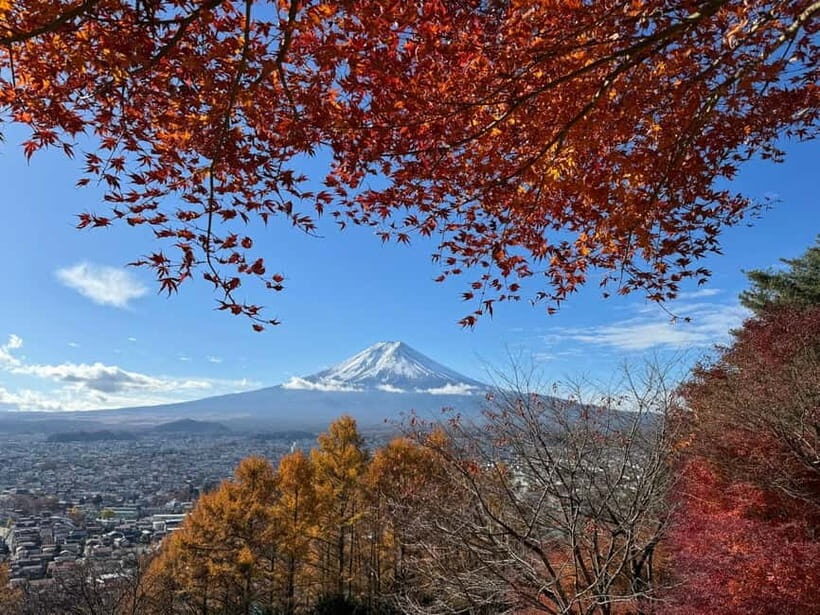
Your first major stop is Arakurayama Sengen Park, one of the Fuji photo hotspots people talk about for a reason. You climb the Konohana-sakuya-hime Stairs, which total 398 steps, and the payoff is the panoramic viewing platform above Fuji-Yoshida.
This is a place where photos are only half the point. Standing up there, you see how Mt. Fuji sits in the region’s layout—the city below, the approach roads, and the mountain as the main character. In spring, the cherry trees along the route can create a soft, layered look. In fall, the path can turn into a red-and-gold corridor that frames your Fuji views.
Practical note: 398 steps isn’t “museum stairs,” so wear shoes you can walk in for a long day. If you’re the type who gets winded easily, pace yourself. The goal isn’t to sprint to the top; it’s to arrive calm enough to enjoy the views.
Shimoyoshida Honcho Street for Fuji-Facing Townscape Photos
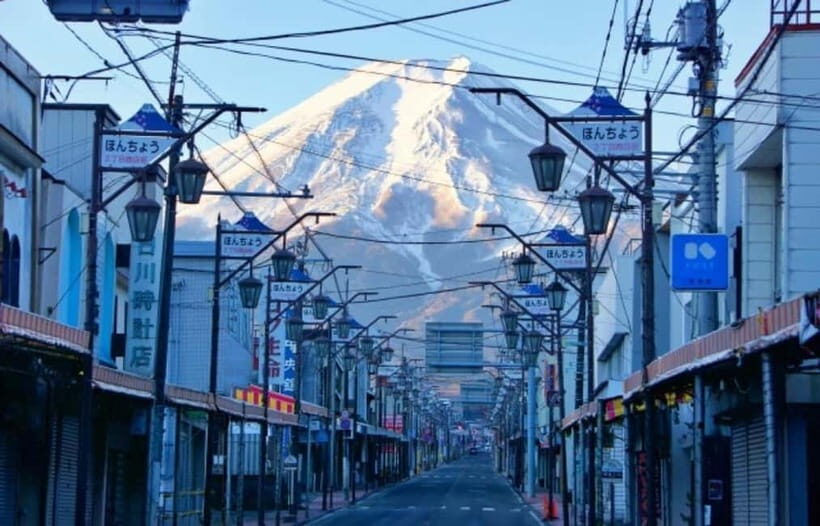
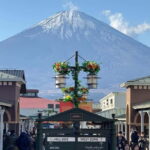
Next you head to Shimoyoshida Honcho Street, a traditional town-street area built around a very specific visual trick: it lines up into a townscape that includes Mt. Fuji in the background. This is where your camera work changes. Instead of aiming at a single mountain view, you’re capturing a street scene with Fuji as the far focal point.
This stretch is also a nice change of pace after the steps. You can slow down, walk, and look for the angles where the street perspective draws your eye toward the mountain. It’s the kind of place that makes an ordinary alley turn into a “how did they get that shot” frame.
If you’re traveling with people who don’t care much about Mt. Fuji angles, this stop still works because it’s a real shopping-and-walking street with old-town atmosphere. In other words, it’s not only about the mountain.
Oshino Hakkai: Eight Ponds Fed by Snowmelt and Framed by Forest
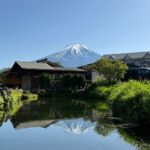
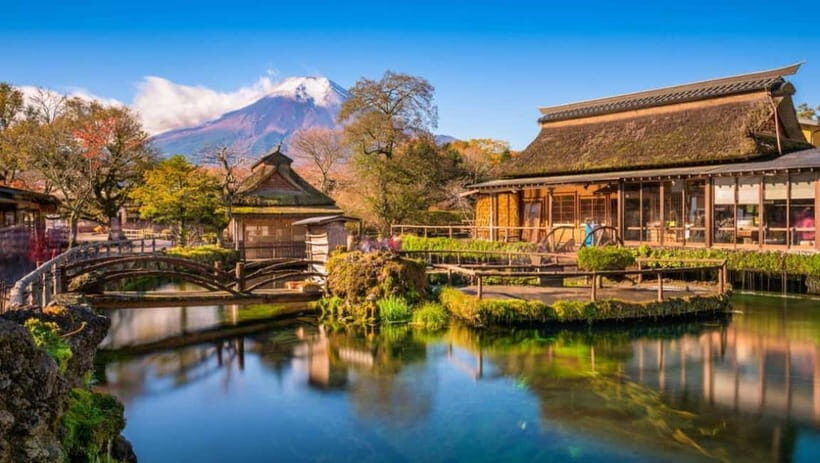
Then it’s over to Oshino Hakkai, a village known for eight crystal-clear spring ponds. These ponds are fed by Mt. Fuji’s snowmelt, which is why the water stays so clean and reflective. If you’re hoping for photos that feel calm and “grounded,” this is a strong counterweight to the big scenic viewpoints.
The area is also recognized as a Natural Monument of Japan, and you can see why once you’re there. You’ll find thatched-roof houses, wooden bridges, and flowing streams. It’s a storybook-style countryside scene that many people liken to the look and feel of famous Chinese nature parks—only this is Japan, with its own rhythm and design.
One consideration: even though it feels peaceful, it’s still a photo stop. You’ll likely share space with other people seeking the reflections. Come with patience, and don’t spend the whole time staring at one pond mirror. Walk the paths, check different angles, and you’ll usually get better results.
Lake Kawaguchiko Cruise on the Appare Warship-Style Boat
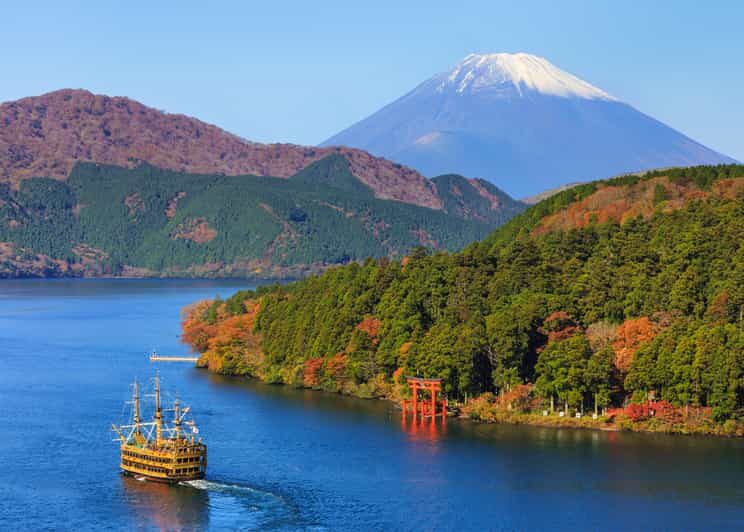
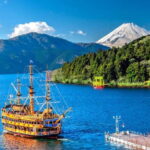
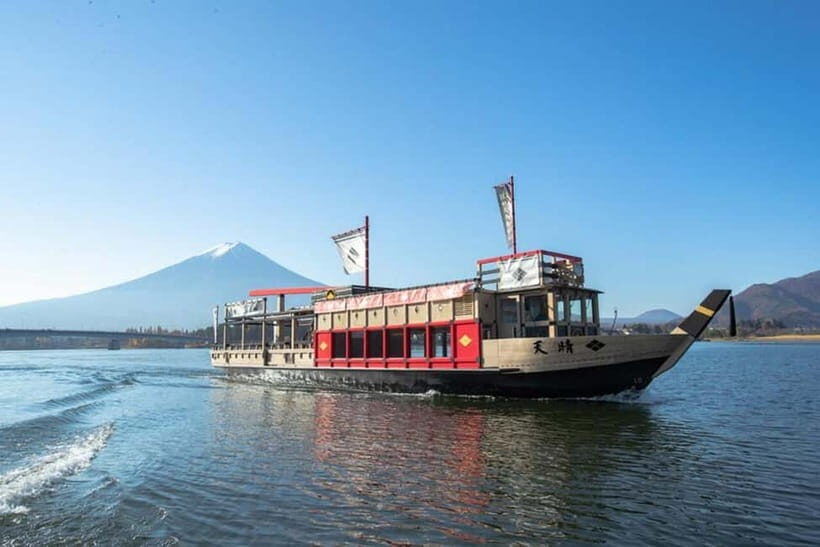
The day’s “wow” moment for many people is the Lake Kawaguchiko cruise on the Appare boat. This boat is modeled after a Sengoku-era warship, and that theme isn’t just for decoration. It shapes how you move and how you view the lake.
What matters for your photos and comfort:
- You can enjoy unobstructed views from the open deck
- There’s also a Japanese-style cabin if you need a break from wind or chill
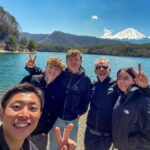
- On clear days, Mt. Fuji can look mirrored on the water, which turns your camera into a lake-reflection machine
This is also where the “multiple angles” idea becomes real. Earlier stops are about height and town lines. The cruise gives you a water-level perspective that’s harder to recreate on your own without planning.
And yes, clouds can soften everything. If the sky is heavy, you may still get the lake experience and the changing scenery, even if Fuji doesn’t show up perfectly.
Other Lake Kawaguchiko tours at Mt Fuji & Kawaguchiko

Oishi Park: Seasonal Color Plus the November Maple Corridor Swap
Your final big nature stop is Oishi Park, a lakefront spot designed for big Fuji views paired with seasonal color. This is one of those places where the same viewpoint feels totally different depending on the month.
Here’s what to expect by season:
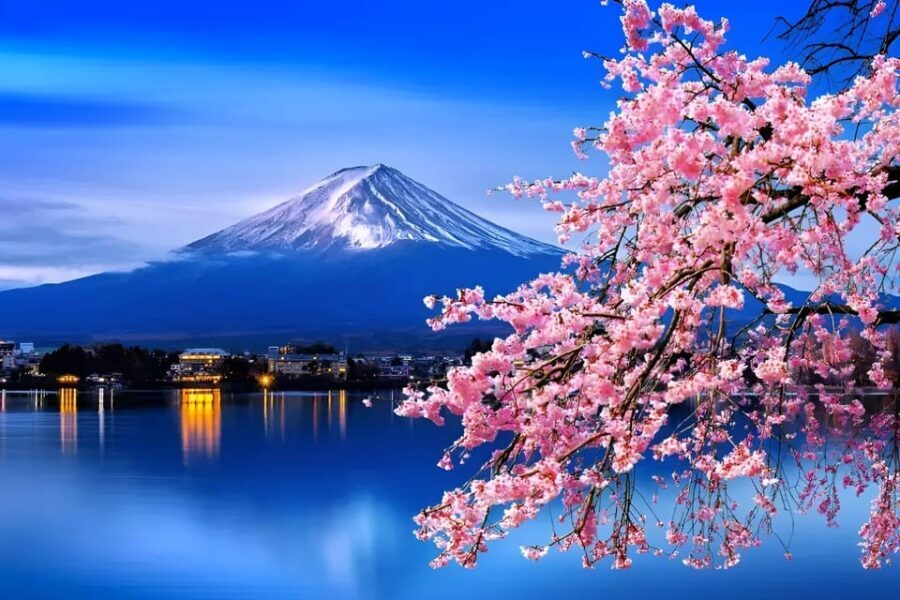
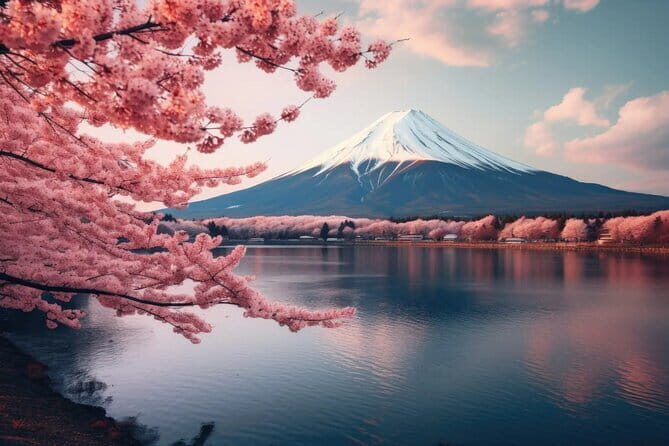
- Spring: golden rapeseed and cherry trees
- Summer: lavender fields
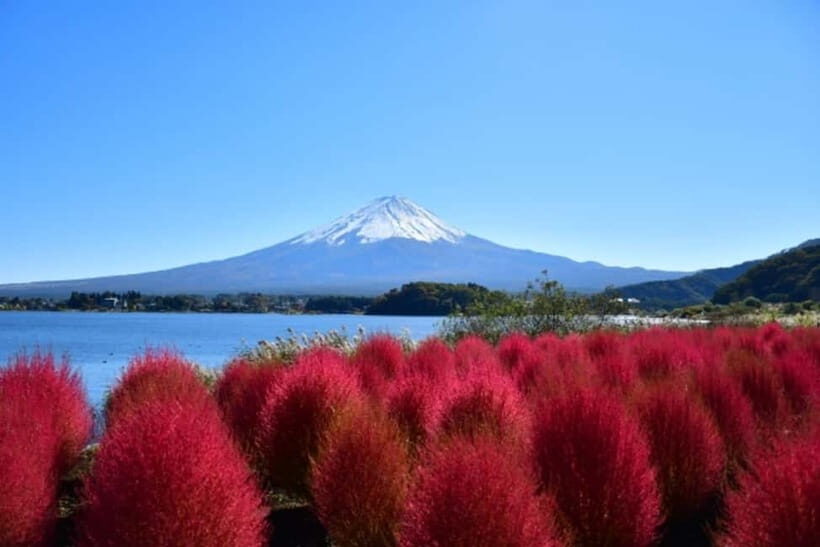
- Autumn: fiery red kochia
- Winter: snowy scenes that can reflect Mt. Fuji inverted on the water
There’s one key timing detail you should know. During autumn foliage season from November 1 to November 23, visits to Oishi Park are temporarily suspended. In that window, the tour replaces it with a visit to the Kawaguchi Lake Maple Corridor.
That substitution is smart from a visitor-experience standpoint. It prevents you from arriving at a park during a period when conditions may be disrupted and swaps in a location aligned with the foliage theme of that time of year.
Guide, Language, and the Real World of English Coverage
This tour includes a live guide with Chinese, English, and Japanese support. There’s also a note that for smaller groups, the driver can serve as the guide.
That’s usually fine, but it’s worth being realistic: language coverage can vary day to day. One English-focused experience I’m aware of highlighted a guide who made a strong effort to explain details in English twice when English speakers were the only ones on the bus. On the other hand, there’s also an example of an English-appropriate guide having very limited English, which can make explanations feel thin.
What you can do: treat the stops like photo-scene + walk-through visits, and don’t rely on getting every detail in English. If you’re comfortable with basic travel Japanese (or you’re fine enjoying visuals more than narration), you’ll likely feel very satisfied.
If English explanations are crucial to your enjoyment, consider booking when you see stronger language signals in the tour schedule.
Price and Value: Why $79 Makes Sense for a Full Fuji Day
At $79 per person for a 10-hour outing, the value isn’t just the view—it’s the logistics you’re avoiding.
Here’s what you’re getting for that price:
- Transportation by car/coach
- A guide
- The Lake Kawaguchiko cruise on the Appare boat
What you’re not getting: lunch, plus meals and drinks and personal shopping expenses.
This pricing structure makes sense for people who want a “best-of Fuji” day without spending time figuring out trains, bus transfers, and ticket timing. The cruise alone is a major component, and it’s hard to replicate last-minute without planning.
If you prefer to eat whenever you want, bring snacks or plan your lunch purchases near stops. The tour doesn’t include it, so build in that flexibility rather than getting surprised mid-day.
Getting the Best Fuji Photos: A Simple Game Plan
Fuji photography is mostly about timing and patience, and this tour helps by placing you at multiple viewpoints. Still, you can improve your results with a few practical choices:
- Keep your camera ready at each stop, not just when you arrive. Light changes fast around water and hill viewpoints.
- Wear comfortable shoes for the walk segments, especially with the 398-step climb early.
- Bring weather-appropriate clothing. You want to enjoy waiting time without shivering or sweating.
- If clouds are thick, pivot your mindset. Shoot trees, ponds, street geometry, and lake reflections when you can, and accept that Mt. Fuji might appear only briefly.
Also, if you care about the classic “Fuji mirrored on the lake” look, the cruise and Oishi Park are your best bets. That reflection effect depends heavily on conditions, but the tour naturally gives you the right locations to try.
Who This Tour Fits Best (and Who Might Prefer Something Else)
You’ll probably love this tour if:
- You want the big Fuji hits in one day
- You like walking for photos and don’t mind stairs
- You want an organized plan with transport and a cruise included
- You enjoy seasonal scenery and want Oishi Park’s different looks across the year
You might consider another option if:
- You dislike long days or heavy walking
- You’re extremely sensitive to schedule changes (like the November Oishi Park swap)
- You need extensive English narration at every stop, since language quality can vary
Overall, it’s a solid choice for first-timers who want a strong Fuji overview without the planning stress.
Should You Book This Mt. Fuji Highlights Tour?
I’d book it if you want a high-efficiency Fuji day with viewpoints that cover height, town streets, ponds, and lake-level scenery. The combination of Arakurayama Sengen Park, Oshino Hakkai, and the Appare cruise gives you multiple “types” of Fuji, not just one.
Just go in with two honest expectations: the day is physically active, and weather controls the payoff. If the sky cooperates, you’ll get postcard-worthy moments. If it doesn’t, you’ll still get a memorable mix of old streets, calm pond scenery, and a relaxing cruise window.
If $79 fits your budget and you’re ready to walk and climb a bit, this is a very reasonable way to see the Fuji area highlights in a single outing.
FAQ
FAQ
Where do I meet for the tour?
You meet at TOKYU PLAZA GINZA 1F.
How long is the tour?
The duration is 10 hours.
What is included in the price?
Transportation by car/coach, a guide, and the Lake Kawaguchiko cruise on the Appare boat are included.
Is lunch included?
No. Lunch and meals/drinks are not included.
What boat is used on Lake Kawaguchiko?
The cruise is on the Appare boat.
How many steps do you climb at Arakurayama Sengen Park?
You climb 398 steps on the Konohana-sakuya-hime Stairs.
What happens to Oishi Park during early November?
From November 1st to November 23rd (autumn foliage season), Oishi Park visits are temporarily suspended and replaced with a visit to the Kawaguchi Lake Maple Corridor.
What languages are available for the live guide?
The guide provides Chinese, English, and Japanese.
Can I cancel and get a full refund?
Yes. You can cancel up to 24 hours in advance for a full refund.
What should I bring?
Bring comfortable shoes, a camera, and weather-appropriate clothing.